How to Communicate with Someone with Hearing Loss: 10 Simple Tips
Want to communicate with someone with hearing loss better? Here’s a simple guide. Book a hearing test at CC Saha Ltd. today!
For generations, a persistent misconception has circulated among audiophiles, concertgoers, and professional musicians: “Hearing aids are great for conversation, but they completely destroy the richness of music.”
If you have ever worn an older digital device to an orchestral concert or tried streaming your favorite album through legacy amplifiers, you might have experienced flat tones, harsh clipping, muffled bass, or unnatural warbling. These frustrating experiences cemented a widespread myth that hearing aid technology is fundamentally incompatible with musical enjoyment.
However, clinical audiology and digital signal processing (DSP) have undergone a massive revolution. Today, using specialized hearing aids for listening to music allows listeners to experience vibrant, full-spectrum harmonies without distortion.
At CC Saha Ltd.’s Audiology Avenue, we break down the scientific reasons behind this historical myth, explore how modern signal processing solves acoustic clipping, and guide you on optimizing your devices for high-fidelity music sound quality.
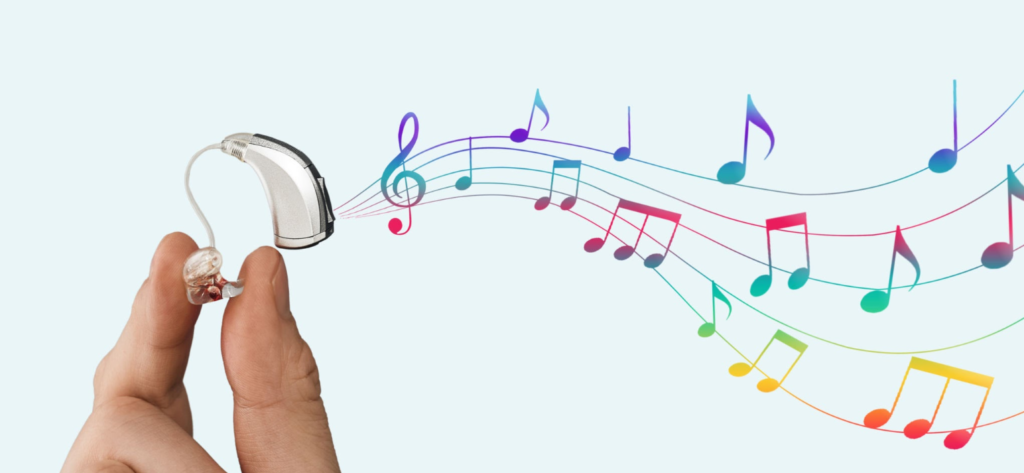
To understand why this myth was born, we must first compare the physics of human speech with the physics of music.
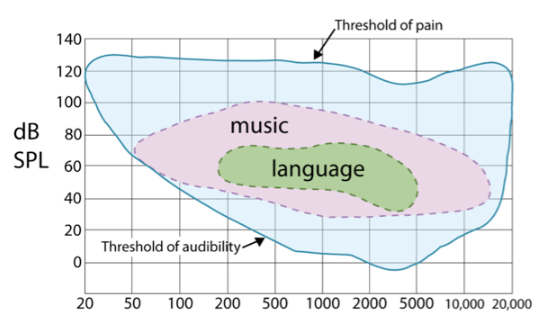
Historically, hearing aids were engineered with a single goal: maximizing speech intelligibility. Human speech is relatively narrow in acoustic scope. The conversational voice operates within a dynamic range of roughly 30 to 45 decibels (dB) and spans frequencies primarily between 250 Hz and 6000 Hz. Because speech priority is clarity, early digital hearing aids were programmed to suppress background sound, compress loud inputs quickly, and narrow the frequency response to focus on consonants.
Music, by contrast, behaves entirely differently:
When music passes through a traditional device optimized strictly for speech, three major technical breakdowns occur:
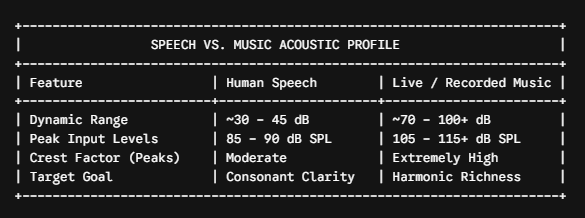
When legacy devices process high-intensity musical passages, the Analog-to-Digital Converter (ADC) hits an upper ceiling, resulting in severe peak input level distortion. The listener hears static, harsh buzzing, and unnatural squelching—giving rise to the belief that amplification ruins musical enjoyment.
In pioneering clinical research from the Musicians’ Clinics (Chasin, 2014) and peer-reviewed studies published in Audiology Online and the Journal of the American Academy of Audiology, researchers identified key misconceptions held by both patients and clinicians regarding music programming.
The Reality: Modern speech processing relies heavily on Wide Dynamic Range Compression (WDRC) with fast attack and release times to make quiet speech audible while protecting against loud bursts.
However, when applied to a guitar solo or piano concerto, aggressive WDRC flattens the natural dynamics. Quiet passages are boosted too high, loud crescendos are squashed down, and musical emotional intent is lost. The best hearing aids for listening to music utilize linear or pseudo-linear processing in dedicated music programs, preserving the natural contrast between soft and loud passages.
The Reality: In early digital hearing aids, the front-end Analog-to-Digital Converter (ADC) overloaded at input levels above 95 dB SPL. Because live music frequently reaches 105–115 dB SPL, the signal distorted before any digital processing could even take place.
Modern high-fidelity hearing aid music sound quality is made possible by 24-bit ADCs and dual-path input architecture capable of handling peak input levels up to 113–118 dB SPL without clipping.
The Reality: Standard adaptive feedback management systems identify continuous, pure tones (like a high whistle) and instantly cancel them using phase inversion or frequency shifting.
Unfortunately, sustained musical notes—such as a flute solo, violin sustained note, or organ chord—are acoustically identical to feedback whistles. Legacy feedback suppressors mistake these musical notes for feedback, creating a jarring, pitch-shifted “warbling” sound. Modern dedicated music algorithms temporarily disable or alter feedback suppression to keep pitch relationships perfectly pure.
Overcoming these limitations required audiologists and hearing aid engineers to rethink digital signal processing from the ground up. Today, selecting appropriate hearing aids for listening to music gives users access to sophisticated features engineered specifically for acoustic harmony:
By elevating the headroom of the front-end microphone and converter, modern hearing aids prevent mechanical and digital clipping during loud musical performances.
Unlike automatic speech environments, a manual or auto-sensing hearing aid music program adjusts the DSP settings specifically for passive listening or active performance:
Modern hearing aid music sound quality benefits greatly from wireless streaming. By delivering audio directly from phones, media players, or venue transmitters via Bluetooth LE Audio, signals bypass room reverberation, background acoustic noise, and distance attenuation entirely.
EXCELLENTTrustindex verifies that the original source of the review is Google. Best servicePosted onTrustindex verifies that the original source of the review is Google. All type of hearing aids are availablePosted onTrustindex verifies that the original source of the review is Google. A trusted and familiar hearing aids clinicPosted onTrustindex verifies that the original source of the review is Google. Signia best h/aidPosted onTrustindex verifies that the original source of the review is Google. Signia best hearing aidPosted onTrustindex verifies that the original source of the review is Google. Signia best hearing aidPosted onTrustindex verifies that the original source of the review is Google. A range of hearing aids are availablePosted onTrustindex verifies that the original source of the review is Google. Very fast and prompt service......liked itPosted onTrustindex verifies that the original source of the review is Google. Hearing machine in good condition, staff is good and polite.Posted onTrustindex verifies that the original source of the review is Google. Best hearing aidsVerified by TrustindexTrustindex verified badge is the Universal Symbol of Trust. Only the greatest companies can get the verified badge who has a review score above 4.5, based on customer reviews over the past 12 months. Read more
If you are a music enthusiast or musician seeking the best hearing aids for listening to music, getting optimal results depends on proper audiological fitting and personalized customization at CC Saha Ltd.
Ensure your audiologist programs a standalone music memory program alongside your daily speech settings.
Objective REM verification ensures frequency response matches your individual ear canal acoustics and target music equalization curves.
Tight acoustic seals retain deep bass frequencies, whereas open domes let natural low notes enter the ear canal directly.
Playing an instrument (like a trumpet or violin) creates high internal sound pressure via bone conduction; your audiologist can adjust gain ceilings to account for your instrument’s proximity.
Q1. Why do hearing aids sound distorted when I listen to live music?
Legacy hearing aids experience distortion during live music because their internal microphones and Analog-to-Digital Converters (ADCs) are capped at lower decibel thresholds designed for speech (around 85–95 dB SPL). When live music exceeds these levels, peak input level clipping occurs before the sound can be processed. Modern hearing aids for listening to music use high-headroom ADCs that handle up to 118 dB SPL without distortion.
Q2. What is the difference between a speech program and a hearing aid music program?
A speech program prioritizes consonant clarity by using fast dynamic compression, directional microphones, ambient noise suppression, and active feedback cancellation. A dedicated hearing aid music program removes aggressive compression, disables noise reduction, uses omnidirectional microphone pick-up, and modifies feedback rules so sustained musical notes remain pure and natural.
Q3. Can I play a musical instrument while wearing modern hearing aids?
Yes, musicians can comfortably play instruments while wearing modern hearing aids. Your audiologist at CC Saha Ltd. can create a customized musician preset that compensates for the high sound pressure generated near your ear or instrument, ensuring clear feedback-free monitoring and accurate pitch perception.
Q4. Why does a flute or violin sound like a vibrato or warbling tone through my hearing aid?
Warbling tones occur when a hearing aid’s automatic feedback cancellation system misidentifies a clean, sustained musical note (like a flute or violin tone) as internal feedback whistling. The device attempts to cancel the note using phase inversion, creating an unwanted artificial vibrato. Switching to a dedicated music program disables this aggressive cancellation algorithm.
Q5. Are open fit domes or closed earpieces better for hearing aid music sound quality?
The choice between open and closed fitting depends on your personal hearing loss profile. Open fit domes allow natural bass frequencies to enter the ear canal directly, creating a rich soundscape for mild-to-moderate high-frequency loss. However, for moderate-to-severe losses, closed custom earpieces retain low-frequency bass energy generated by the hearing aid speakers.
Q6. How do I find the best hearing aids for listening to music?
The best hearing aids for listening to music feature a wide dynamic input range (at least 110 dB SPL peak limit), high sampling frequency, multi-channel linear processing, customizable equalizer settings, and dedicated music programs validated through Real-Ear Measurement (REM).
Q7. Does Bluetooth streaming improve hearing aid music sound quality compared to room acoustic listening?
Bluetooth streaming delivers direct, pristine audio signals from your smartphone or media player straight into the hearing aid processors. This bypasses room reverberation, ambient background noise, and acoustic distance losses, offering exceptional clarity for recorded music, though live concerts still rely on acoustic microphone performance.
Q8. Why does recorded music sometimes sound thin or lacking bass through amplification?
Hearing aids feature small receivers (speakers) optimized for high-frequency speech clarity rather than subwoofer-style bass. If your earpieces have large acoustic vents, low-frequency bass leaks out before reaching your eardrum. Adjusting vent sizing or boosting low-frequency gain in your music program restores warm, resonant bass tones.
Q9. Is Wide Dynamic Range Compression (WDRC) good or bad for music listening?
Aggressive WDRC designed for speech is generally detrimental to music because it squashes dynamic contrasts—making quiet passages unnaturally loud and loud passages compressed. Music programs utilize lower compression ratios or linear amplification to preserve the artist’s intended dynamic range.
Q10. How can CC Saha Ltd. help me optimize my hearing aids for music appreciation?
CC Saha Ltd. provides expert audiological fittings using advanced Real-Ear Measurement (REM) equipment, customized music program tuning, earpiece selection, and personalized acoustic counseling. Our clinical specialists tailor every device to match your personal listening habits, musical preferences, and lifestyle needs.
Ready to Experience True High-Fidelity Sound Again?
Don’t let outdated technology stand between you and the music you love. Whether you’re a performing musician, a frequent concertgoer, or simply missing the full depth of your favorite albums, CC Saha Ltd.’s Audiology Avenue is here to restore every note.
The good news? You don’t have to guess what’s causing your vertigo.
Experience Universal Accessibility at Your Nearest CC Saha Clinic: Click Here to Book Your Appointment
Speak to an Expert: Call our Toll-Free number 1800 570 9930 (Available Mon-Sat | 10:00 am – 6:30 pm)
Visit CC Saha Ltd.—90 Years of Trust and Excellence.
#HearingAids #MusicAndHearing #AudiologyAvenue #CCSahaLtd #SoundQuality #HearingHealth #Audiology #MusicLovers #HearingAidsForMusic #HighFidelityAudio #CCSahaLtd
Want to communicate with someone with hearing loss better? Here’s a simple guide. Book a hearing test at CC Saha Ltd. today!
If you hear a strange wind noise in your ears, you’re not alone. Discover the causes, get expert solutions, and find the best help at CC Saha Ltd. in Kolkata!
Explore the best speech therapy centers for children in Kolkata with our expert guide for modern parents seeking quality care and communication support.
Explore the emerging health connection between fatty liver and hearing loss, especially among Kolkata’s young urban adults this World Liver Day.
Yes, you can live a normal and fulfilling life with hearing loss. Here’s how to embrace it, adapt, and thrive in Kolkata’s vibrant urban rhythm.
Approximately 50% of individuals aged 75 years and beyond encounters a diminution of 35 decibels or more in their auditory acuity—a juncture necessitating the employment of a hearing augmentation device. The younger generations are catching up too.