
How to Communicate with Someone with Hearing Loss: 10 Simple Tips
Want to communicate with someone with hearing loss better? Here’s a simple guide. Book a hearing test at CC Saha Ltd. today!
The window between infancy and early childhood is marked by an extraordinary neurological transformation. Among the various domains of growth, Pediatric Speech & Language Development stands out as one of the most dynamic indicators of a child’s overall cognitive and emotional health. Language is more than just spoken words; it is an intricate framework involving cognitive planning, muscular coordination, sensory processing, and social awareness.
When a child struggles to produce sounds or understand spoken language, the impacts ripple into social bonding, academic performance, and psychological well-being. For parents navigating this complex landscape, distinguishing a temporary “late-blooming” phase from a true clinical delay requires structured clinical insight.
As a leading audiology and speech-language healthcare entity with a legacy spanning over 90 years, CC Saha Ltd. presents this analytical guide to help you recognize milestones, identify warning signs, understand the vital connection between hearing and speaking, and navigate intervention pathways in Kolkata.
To accurately monitor a child’s progress, parents must first understand that “speech” and “language” refer to distinctly different clinical functions:
A toddler might possess excellent language skills—understanding complex multi-step instructions—yet exhibit a severe speech articulation disorder that renders their words unintelligible. Conversely, another child might articulate distinct words perfectly but exhibit a language delay, struggling to synthesize those isolated words into a meaningful phrase. Comprehensive observation of both domains forms the cornerstone of proactive early intervention.
Monitoring your child’s communication milestones is critical for mapping healthy neural development. Below is a structured, comprehensive breakdown of the typical capabilities expected from ages 2 to 5.
By age two, a child’s expressive vocabulary should expand exponentially, a phenomenon often termed the “word spurts.”
The third year marks a transition from basic needs communication to functional, conversational storytelling.
At four years of age, language becomes a tool for creative expression, imaginative play, and social integration.
By the time a child enters formal primary schooling, their linguistic foundation should be structurally complete.
While every child develops at an individual pace, significant deviations from established windows can point to an underlying speech delay. Identifying a speech delay in toddlers early protects the child from long-term communication barriers.
Parents should look for these distinct warning signs across early childhood:
Beyond these specific age gates, any sudden regression in language skills—such as a child who stops talking or using words they previously mastered—demands an immediate, comprehensive medical and audiological assessment.
When assessing a child for speech or language difficulties, the auditory pathway is the very first area clinical specialists evaluate. The brain cannot accurately program, replicate, and monitor speech sounds if it cannot clearly receive them. There is a profound, causal link between undetected hearing loss and expressive/receptive language delays.
A child who suffers from mild, moderate, or fluctuating hearing loss—often caused by recurrent otitis media (fluid buildup in the middle ear)—experiences an acoustic signal that is muffled, distorted, or missing key frequencies. High-frequency consonants such as s, f, t, k, and sh carry immense grammatical and phonetic weight in human language. If a toddler cannot hear these sounds clearly, they cannot learn to pronounce them correctly, leading to severe articulation deficits and grammar delays.
Furthermore, a child with an unaddressed hearing impairment has to expend enormous cognitive energy simply trying to decode acoustic signals. This leaves fewer neural resources available for processing the actual meaning of words, tracking syntax, and building vocabulary.
What appears to a parent or teacher as an attention deficit, stubbornness, behavioral disruption, or an isolated speech delay is frequently a direct byproduct of a pediatric hearing condition. Consistently scheduling a professional audiological evaluation is the foundational step in addressing early childhood communication issues.
When a family visits a specialized clinic like CC Saha Ltd., diagnosing a communication delay requires a holistic, scientific protocol. A key component of this diagnostic journey is the psychometric test for speech therapy.
Rather than relying on casual observation, a psychometric assessment uses validated, standardized clinical tools to objectively measure a child’s cognitive processing speed, non-verbal intelligence, attention management, behavioral traits, and underlying language aptitude.
Common assessment tools utilized during this process include:
If your child exhibits signs of a speech or language delay, finding localized, expert care is paramount. CC Saha Ltd. provides access to a dedicated pediatric speech therapist Kolkata across a network of modern audiological and speech rehabilitation clinics.
Choosing a pediatric speech therapist in Kolkata through a recognized clinic like CC Saha Ltd. ensures that your child is supported by licensed, certified professionals who specialize in early childhood communication disorders. These specialists don’t just work in isolation; they integrate audiological data, psychometric profiles, and individualized physical mechanics to build tailored therapy programs.
Our therapeutic approach features:
With centrally located clinics across West Bengal—including Esplanade, Prince Anwar Shah Road, Salt Lake, Dunlop, Barasat, Burdwan, and Midnapore—families have easy access to comprehensive audiological screenings, pediatric diagnostic tests, and personalized speech therapy under one roof.
EXCELLENTTrustindex verifies that the original source of the review is Google. Best servicePosted onTrustindex verifies that the original source of the review is Google. All type of hearing aids are availablePosted onTrustindex verifies that the original source of the review is Google. A trusted and familiar hearing aids clinicPosted onTrustindex verifies that the original source of the review is Google. Signia best h/aidPosted onTrustindex verifies that the original source of the review is Google. Signia best hearing aidPosted onTrustindex verifies that the original source of the review is Google. Signia best hearing aidPosted onTrustindex verifies that the original source of the review is Google. A range of hearing aids are availablePosted onTrustindex verifies that the original source of the review is Google. Very fast and prompt service......liked itPosted onTrustindex verifies that the original source of the review is Google. Hearing machine in good condition, staff is good and polite.Posted onTrustindex verifies that the original source of the review is Google. Best hearing aidsVerified by TrustindexTrustindex verified badge is the Universal Symbol of Trust. Only the greatest companies can get the verified badge who has a review score above 4.5, based on customer reviews over the past 12 months. Read more
Q1. What is the difference between a speech delay and a language delay?
A speech delay refers strictly to difficulties with the physical mechanics of sound production, such as articulation errors, stuttering, or vocal cord issues. A language delay involves difficulties understanding or processing spoken words (receptive language) or struggling to formulate thoughts into meaningful sentences (expressive language). A child can experience one or both of these issues simultaneously.
Q2. How can I tell if my toddler’s speech delay is caused by a hearing issue?
Signs that a speech delay may stem from an underlying hearing impairment include failing to turn toward sudden sounds, ignoring spoken requests, turning up the volume on media devices excessively, or struggling to pronounce high-frequency consonant sounds like s, f, t, and sh. The only definitive way to rule out a hearing issue is through a professional pediatric audiological evaluation.
Q3. What exactly happens during a psychometric test for speech therapy?
A psychometric test uses standardized, age-appropriate play tasks, object identification, and interactive puzzles to evaluate a child’s cognitive development, memory, attention span, non-verbal reasoning, and language comprehension. This evaluation provides an objective map of your child’s learning profile, helping clinicians rule out broader neurodevelopmental disorders.
Q4. Is it possible for a child to simply outgrow a speech delay without therapy?
While some children are “late talkers” who eventually catch up on their own, waiting to see if a child outgrows a noticeable delay carries significant risk. Missing early windows for speech and language therapy can lead to persistent academic challenges, social isolation, and behavioral frustration. Early clinical screening is always the safest approach.
Q5. At what age should I take my child to a pediatric speech therapist Kolkata clinic?
You should seek a specialist’s opinion the moment your child misses a major age milestone or displays any key red flags, even as early as 12 to 18 months. Early intervention during the peak phases of neuroplasticity (ages 1 to 3) yields the fastest and most sustainable improvements in communication.
Q6. Can a middle ear infection cause a speech delay in toddlers?
Yes, fluid buildup behind the eardrum from chronic or untreated middle ear infections (otitis media) can cause temporary, fluctuating hearing loss. When a toddler’s hearing is muffled during critical language-learning months, it frequently disrupts their ability to process syntax and articulate speech sounds correctly.
Q7. How long does a typical pediatric speech therapy program last?
The duration of speech therapy varies based on the underlying diagnosis, the severity of the delay, the child’s cognitive profile, and consistency with home practice. Some children show excellent progress within a few months, while others with complex structural or neurological conditions may benefit from ongoing support over a year or more.
Q8. What role do parents play in the speech therapy process?
Parents are vital partners in a child’s speech therapy journey. Speech-language pathologists provide specific strategies, vocabulary games, and conversational exercises for families to practice at home. Consistently reinforcing these techniques in day-to-day routines helps children generalize their new communication skills much faster.
Q9. Will raising my child in a bilingual home cause a speech delay?
No, growing up in a bilingual or multilingual home does not cause a speech delay. While bilingual children may occasionally mix grammar rules or words from both languages temporarily (known as code-switching), their total conceptual vocabulary across both languages should match the milestones of a monolingual child of the same age.
Q10. How can I schedule a comprehensive pediatric speech and hearing evaluation in Kolkata?
You can easily book a professional pediatric assessment, audiological test, or psychometric profile by contacting CC Saha Ltd. through their toll-free healthcare line or by scheduling an appointment online. Our specialists will guide you through an integrated diagnosis and treatment plan at your nearest clinic location.
Don’t Wait and See—Give Your Child the Voice They Deserve.
Early intervention during critical early years makes all the difference. Schedule a comprehensive pediatric speech & hearing evaluation with West Bengal’s most trusted specialists today.
Experience Universal Accessibility at Your Nearest CC Saha Clinic: Click Here to Book Your Appointment
Speak to an Expert: Call our Toll-Free number 1800 570 9930 (Available Mon-Sat | 10:00 am – 6:30 pm)
Visit CC Saha Ltd.—90 Years of Trust and Excellence.
#PediatricSpeechAndLanguageDevelopment #SpeechDelayInToddlers #PediatricSpeechTherapistKolkata #PsychometricTestForSpeechTherapy #SpeechMilestones #ChildDevelopment #CCSahaLtd #AudiologyAvenue #KolkataParenting #EarlyIntervention
Want to communicate with someone with hearing loss better? Here’s a simple guide. Book a hearing test at CC Saha Ltd. today!

If you hear a strange wind noise in your ears, you’re not alone. Discover the causes, get expert solutions, and find the best help at CC Saha Ltd. in Kolkata!
Explore the best speech therapy centers for children in Kolkata with our expert guide for modern parents seeking quality care and communication support.

Explore the emerging health connection between fatty liver and hearing loss, especially among Kolkata’s young urban adults this World Liver Day.
Yes, you can live a normal and fulfilling life with hearing loss. Here’s how to embrace it, adapt, and thrive in Kolkata’s vibrant urban rhythm.
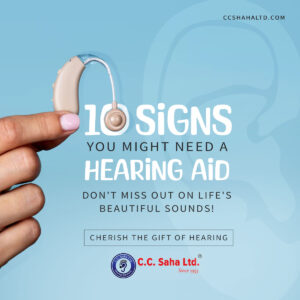
Approximately 50% of individuals aged 75 years and beyond encounters a diminution of 35 decibels or more in their auditory acuity—a juncture necessitating the employment of a hearing augmentation device. The younger generations are catching up too.