Q1. How do I choose my hearing aid style if I wear glasses?
When choosing a hearing aid as a glasses wearer, physical space behind the pinna is your primary consideration. RIC instruments are generally preferred over traditional BTEs because their thin receiver wires take up minimal room alongside glasses frames. Alternatively, if your audiogram allows, a custom custom-moulded CIC device like the Starkey Signature Series bypasses the back of the ear entirely, eliminating physical overlap with your glasses.
Q2. Does a more expensive hearing aid mean better hearing?
A premium price tag doesn’t mean the device is simply “louder”—it reflects the processing power of the computer chip inside. High-tier models contain advanced algorithms that analyze, clean, and prioritize sound up to 100 times per second. This enables complex features like Signia’s multi-speaker tracking or Phonak’s Deep Neural Network noise reduction, which are essential for clear hearing in noisy environments.
Q3. Are rechargeable hearing aids better than battery-operated ones?
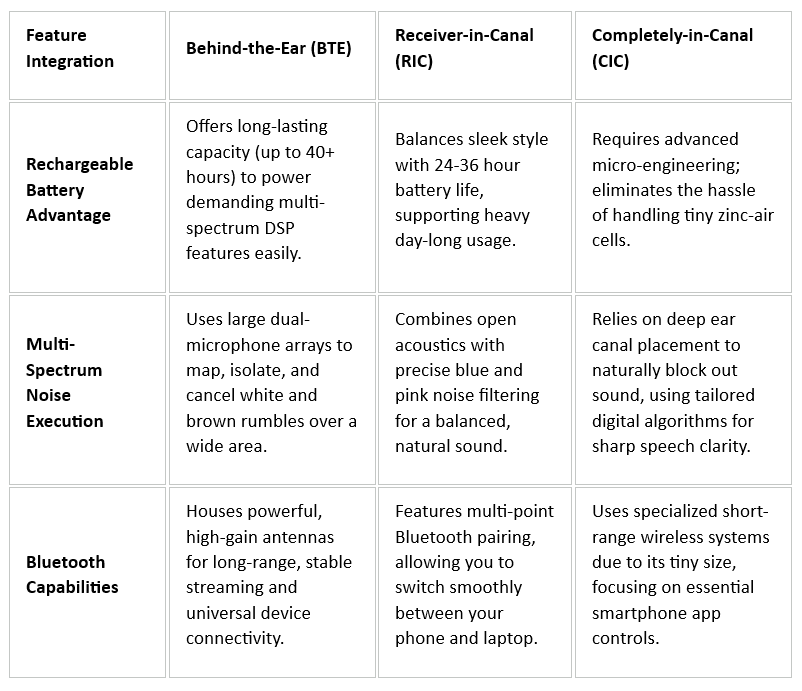
Rechargeable lithium-ion setups are highly recommended for most lifestyles due to their reliability, ease of use, and eco-friendly design. They eliminate the hassle of handling tiny, single-use zinc-air batteries every few days. More importantly, rechargeable power is essential for running power-heavy features like continuous Bluetooth streaming and real-time noise cancellation without constant power drops.
Q4. Can I connect my hearing aid directly to my smartphone?
Yes, most modern RIC and BTE instruments feature native Bluetooth integration. Platforms like the Phonak Audio Infinio offer universal connectivity to both Apple iOS and Android ecosystems, allowing you to stream phone calls, music, and videos directly into your ears while enjoying hands-free calling. However, ultra-small custom CIC devices often leave out wireless streaming antennas to maintain their tiny size.
Q5. How long do modern hearing aids usually last?
High-quality digital hearing aids typically have an operational lifespan of 5 to 7 years. The mechanical components themselves are built to last, but changes in your personal hearing profile or leaps in audio processing technology over time often lead patients to upgrade their devices before they physically wear out.
Q6. Will a hearing aid stop my tinnitus completely?
While hearing aids are not a cure for tinnitus, they are highly effective at managing it. By bringing back the ambient background sounds you’ve been missing, they naturally draw your brain’s focus away from internal ringing. Additionally, advanced platforms feature customizable sound therapy tools—like blue noise generation—to help soothe and mask persistent tinnitus.
Q7. Is the RIC style definitively better than the traditional BTE style?
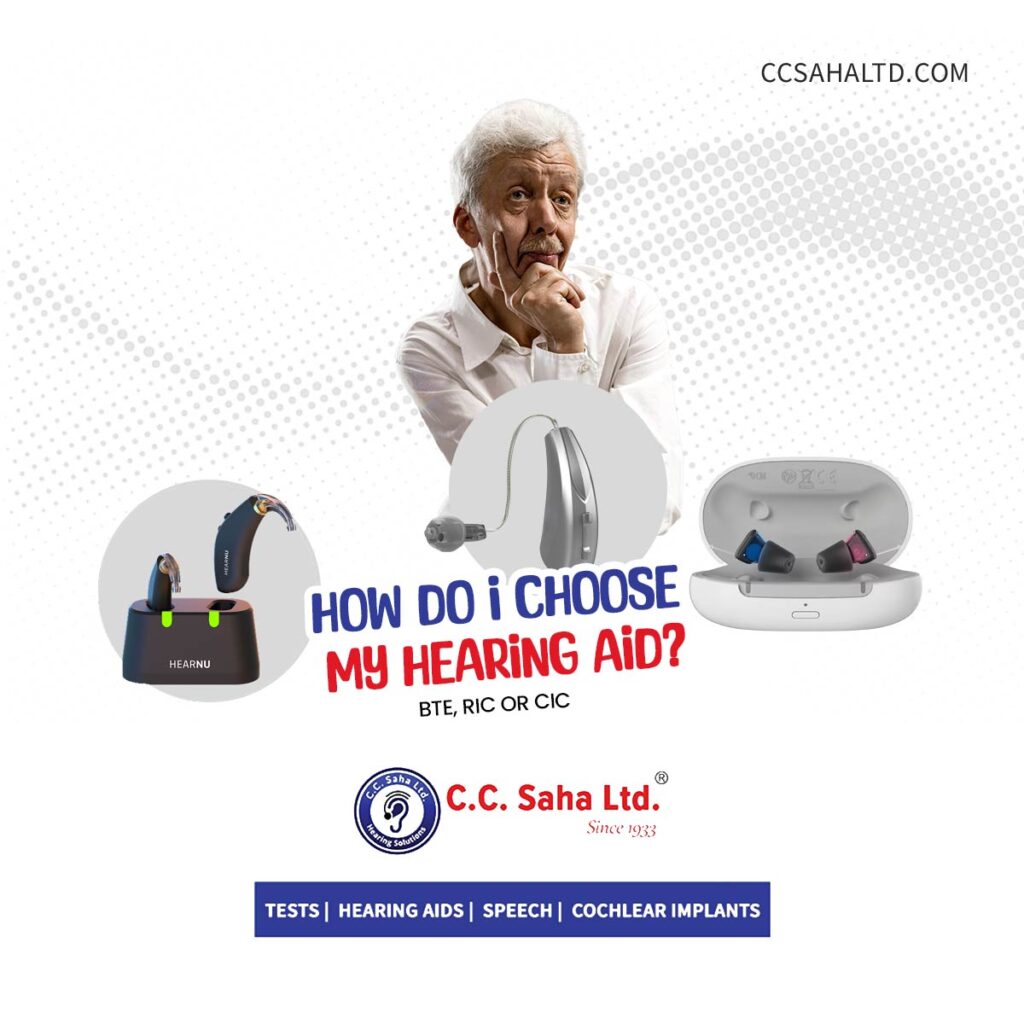
Neither style is universally “better”; your choice depends entirely on your specific hearing needs. RIC devices offer superior cosmetic discretion and a more open, natural sound, making them perfect for mild-to-severe high-frequency hearing loss. On the other hand, traditional BTE models remain the gold standard for severe-to-profound hearing loss because their larger size provides the necessary physical stability and acoustic power.
Q8. What is the “occlusion effect” and how can I avoid it?
The occlusion effect is that boomy, echoey sensation where your own voice sounds like you’re talking inside a barrel. It occurs when a hearing aid completely blocks off your ear canal, trapping the low-frequency sound vibrations generated by your vocal cords when you speak. You can easily minimize this by choosing an open-fit RIC device or ensuring a custom CIC shell is built with a proper ventilation channel.
Q9. How often should I have my hearing aids checked and adjusted?
We recommend visiting your audiologist for a routine check-up and professional cleaning every 6 months. Your hearing profile can change gradually over time, and regular visits allow us to fine-tune your devices to match your latest audiogram while checking that the hardware is performing at its best.
Q10. Why should I choose CC Saha Ltd. for my hearing journey?
Choosing a hearing aid is only the first step—the true key to better hearing lies in the clinical precision of the fitting process. At CC Saha Ltd., every recommendation is backed by a deeply rooted commitment to clinical expertise, state-of-the-art diagnostic testing, and dedicated long-term care. This level of personalized attention ensures your device is perfectly matched to your lifestyle, delivering a level of confidence and clarity that an online store simply cannot match.