Q1. What is Bluetooth Auracast and how does it work?
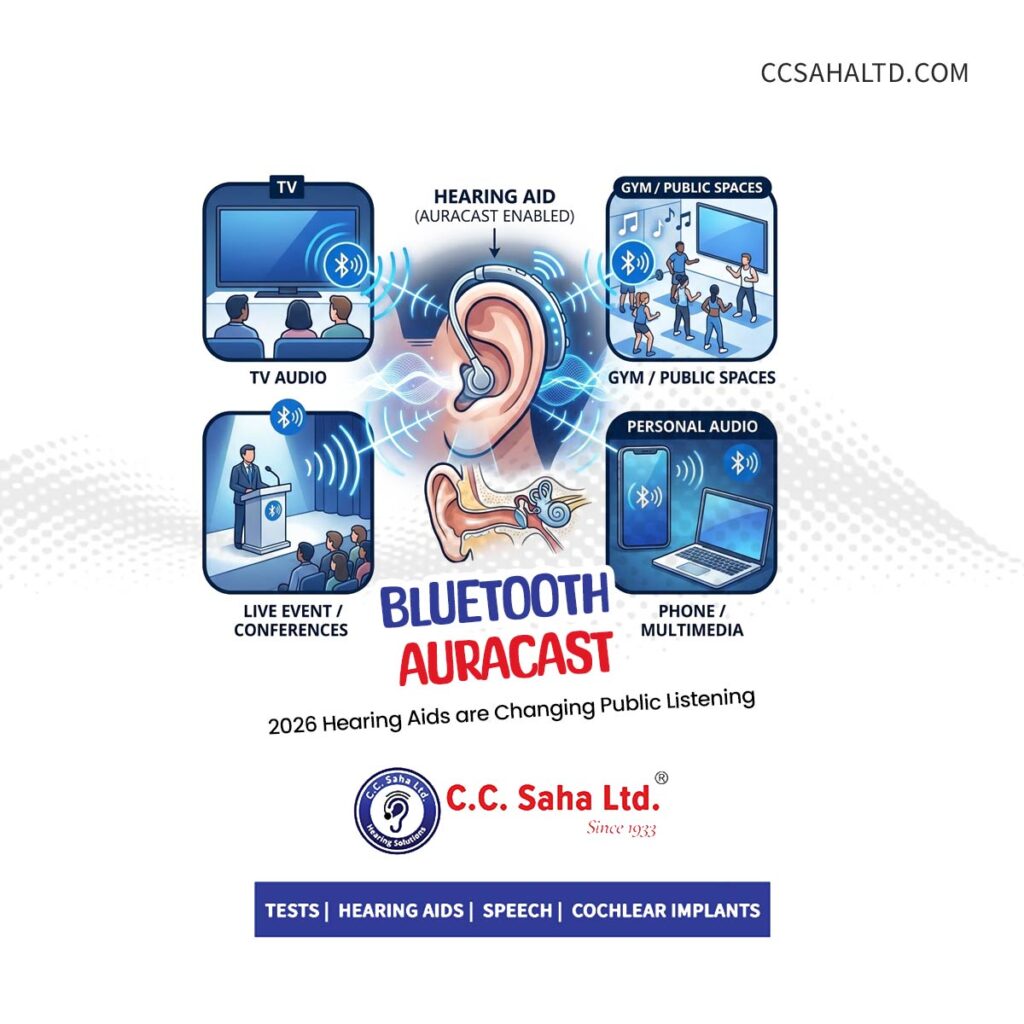
Bluetooth Auracast is a new wireless technology built on Bluetooth Low Energy (LE) Audio. It allows an audio transmitter—such as a television, microphone, or public address system—to broadcast high-quality sound to an unlimited number of nearby Bluetooth receivers simultaneously. It functions similarly to a miniature radio station, where any compatible hearing aid or earbud within range can scan, select, and tune into a specific audio stream.
Q2. How do 2026 hearing aids differ from older models regarding Auracast?
By 2026, hearing aid manufacturers have embedded native Bluetooth LE Audio hardware and the LC3 codec into their core chipsets. Older hearing aid models relied on classic Bluetooth, which only allowed one-to-one pairings and suffered from high battery drain. 2026 models can maintain connection to a personal smartphone while simultaneously scanning and streaming from public Auracast networks without killing the battery.
Q3. Can Bluetooth Auracast completely replace old T-Coil (induction loop) systems?
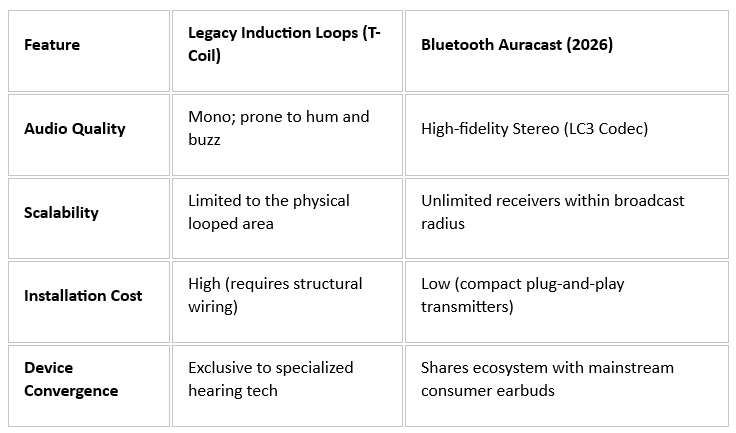
While Auracast is technically superior in audio quality, stereo transmission, and ease of installation, it will co-exist with T-Coil systems for some time. T-coils are deeply embedded in the infrastructure of thousands of global venues. However, Auracast is rapidly becoming the standard for new installations due to its low infrastructure cost and its ability to stream directly to both consumer earbuds and hearing aids.
Q4. Do I need a special smartphone app to connect my hearing aids to an Auracast broadcast?
In most cases, yes, though the functionality is being integrated natively into smartphone operating systems. You can use your hearing aid’s companion app or your phone’s system Bluetooth settings to scan the local area for available streams, much like searching for a Wi-Fi network. Some venues also offer QR codes or NFC touchpoints that instantly connect your device to the correct channel.
Q5. Is there a limit to how many people can connect to a single Auracast transmitter?
No, there is absolutely no limit to the number of users who can tune in. Because the transmitter simply broadcasts the signal outward without needing to acknowledge, handshake, or manage an individual two-way digital connection with each receiving device, one transmitter can serve five people or five thousand people simultaneously within its operational radius.
Q6. Will using Auracast drain my hearing aid battery faster?
No. Auracast runs on the Bluetooth Low Energy (LE) Audio standard, which utilizes the highly efficient LC3 codec. This setup actually consumes significantly less power than traditional classic Bluetooth streaming. Users can stream audio from public venues for extended periods without worrying about premature battery drain.
Q7. Can Auracast broadcasts be made private or secure?
Yes, Auracast supports encrypted configurations. While public announcements in airports or train stations are kept wide open for everyone, venues like corporate boardrooms, private classrooms, or confidential medical offices can secure their streams with a cryptographic key. Users must input a passcode, scan a secure QR code, or be physically authenticated to join the stream.
Q8. What happens to my personal phone calls if I am tuned into a public Auracast stream?
Your 2026 hearing aids are designed to intelligently prioritize your audio streams. If you are tuned into a public museum tour or airport screen via Auracast and an urgent personal phone call comes through on your paired smartphone, your hearing aids will seamlessly pause or lower the Auracast stream and route the phone call directly to you, reverting to the broadcast once the call ends.
Q9. Are consumer wireless earbuds compatible with the same Auracast systems used by hearing aids?
Yes, and this is one of the biggest benefits of the technology. Because Auracast is a universal Bluetooth standard rather than a proprietary medical protocol, mainstream consumer wireless earbuds and consumer headphones utilize the exact same technology. This unifies assistive listening and consumer audio into a single shared ecosystem.
Q10. How can I find out if a public venue supports Bluetooth Auracast?
Venues equipped with this technology typically display the official Bluetooth Auracast trademark symbol on doors, counter desks, or digital message boards. Additionally, when you open the Bluetooth broadcast scanning tool on your smartphone or hearing aid app within the venue, the available audio channels will automatically populate on your screen.