Why Speech Therapy is Essential
After Getting a Cochlear Implant

Beyond the Hearing Device

When a recipient’s device is turned on during activation day, families often anticipate an immediate breakthrough—expecting the user to instantly comprehend spoken words and converse effortlessly. However, activation is merely the starting line of a multi-stage journey. Providing access to sound is only half the solution; the brain must learn how to process, interpret, and assign meaning to those acoustic signals.

Understanding why speech therapy after cochlear implant surgery is indispensable requires examining how the human auditory cortex responds to new electrical inputs. At CC Saha Ltd.’s Audiology Avenue, our clinical experience confirms that hardware and mapping represent only 50% of successful hearing rehabilitation. The remaining 50% relies on structured speech therapy after cochlear implant activation, specifically through specialized techniques like Auditory Verbal Therapy (AVT).

To understand why speech therapy after cochlear implant fittings is necessary, it helps to distinguish between hearing sound and processing language.

The Difference Between Acoustic Hearing and Electrical Hearing

A naturally functioning biological ear uses tiny hair cells in the cochlea to translate mechanical sound waves into complex fluid vibrations. These vibrations trigger thousands of delicate neural pathways that send rich, nuanced signals to the brain.

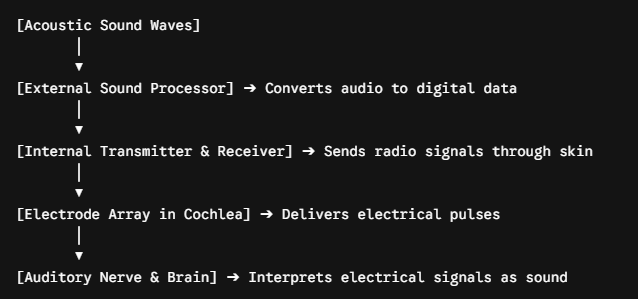
In contrast, a cochlear implant bypasses damaged inner ear hair cells entirely. It uses an external processor to capture acoustic energy, convert it into digital data, and send electrical pulses through an internal electrode array directly to the auditory nerve.

While this technology is remarkable, electrical stimulation differs significantly from natural acoustic hearing:

  • Signal Resolution: The internal electrode array provides between 12 and 22 channels of electrical contact, replacing thousands of natural biological hair cells.
  • Pitch Perception: Pitch is delivered through discrete frequency bands across the electrode array rather than a continuous biological frequency gradient.
  • Sound Perception: Early on, adults often report that incoming voices sound “robotic,” “staticky,” or synthetic, while young children may find the new sensory input overwhelming.

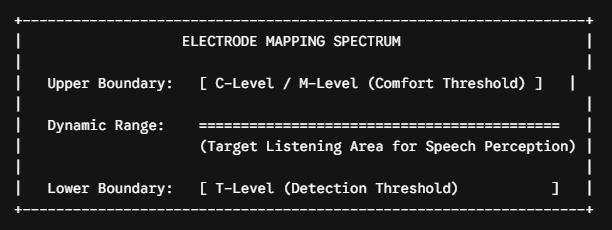
Audiological mapping (or programming) is the process where an audiologist calibrates the processor’s electrical current. The clinician sets two primary levels for each electrode band:

  1. T-Level (Threshold): The softest electrical current the user can detect.
  2. C-Level or M-Level (Comfort): The maximum current level that is comfortable without being uncomfortably loud.

Proper mapping ensures that sound signals fit comfortably within the recipient’s dynamic range. However, mapping only adjusts the volume and delivery of signals—it does not teach the brain how to interpret them.

Without structured speech therapy after cochlear implant programming, an individual may hear sound impulses without understanding what they mean. A child might hear a door slam, a dog bark, or their mother calling their name, but without targeted post cochlear implant auditory habilitation, these sounds remain unorganized background noise.

Call Us for Support

[Mon – Sat, 10am – 6:30pm]

Once surgical healing is complete and initial device mapping is established, the critical work of auditory rehabilitation begins. The primary therapeutic approach used for young children receiving implants is Auditory Verbal Therapy (AVT).

Neuroplasticity and the Auditory Cortex

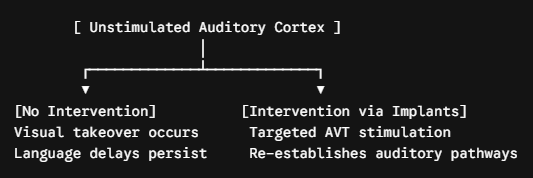
The human brain possesses neuroplasticity—the ability to reorganize neural pathways in response to new sensory experiences. When an individual suffers from severe-to-profound hearing loss, the brain’s auditory cortex can lie understimulated. In young children, if auditory pathways are not stimulated during the critical early years (0 to 3 years old), the brain may reassign those unused cortical areas to visual processing.

Commencing speech therapy after cochlear implant activation leverages this window of neuroplasticity. Structured auditory training encourages the brain to build new neural connections dedicated to decoding electrical pulses. Through repeated exposure and guided practice, the auditory cortex learns to convert raw acoustic signals into recognizable phonemes, words, and full sentences.

Core Principles of Auditory Verbal Therapy (AVT)

Auditory Verbal Therapy is an evidence-based, specialized approach designed to teach children with hearing loss to listen and speak using their amplified hearing. Unlike traditional speech therapy methods that may rely heavily on lip-reading, visual cues, or sign language, AVT focuses directly on the auditory channel.

Key principles of AVT include:

  • Auditory-First Input: Therapists intentionally present spoken language without visual prompts (often using an auditory screen or sitting beside/behind the child) so the brain relies solely on acoustic input.
  • Parent-Centred Coaching: Parents actively participate in every therapy session, learning how to turn everyday routines at home into rich listening opportunities.
  • Early Intervention: Enrolling in speech therapy after cochlear implant activation as early as possible helps children meet age-appropriate listening and language milestones.
  • Mainstream Integration: The long-term goal of AVT is to prepare children to attend mainstream educational environments alongside their typical-hearing peers.

Stages of Auditory Development

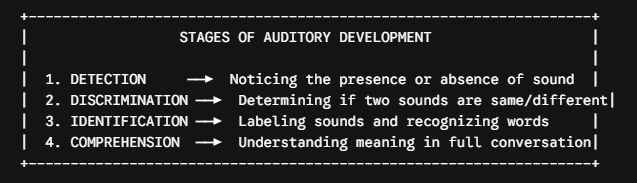
Through targeted speech therapy after cochlear implant placement, recipients progress through four established stages of auditory skill development:

1. Sound Detection

The foundational stage involves helping the recipient recognize whether a sound is present or absent. Exercises focus on basic awareness, such as conditioning a child to drop a toy block into a bucket whenever they hear a sound (e.g., the “Ling Six Sound Test”: /a/, /u/, /i/, /s/, /sh/, /m/).

2. Sound Discrimination

Once sound detection is reliable, therapy moves to identifying differences between acoustic signals. The user learns to distinguish between long and short sounds, loud and soft tones, high and low pitches, or words with varying syllable counts (e.g., “cat” vs. “banana”).

3. Sound Identification

In this phase, the recipient learns to associate specific sound patterns with concrete objects or actions. The individual learns to identify items based solely on their spoken names or acoustic properties without visual prompts (e.g., selecting a toy train when hearing “choo-choo”).

4. Auditory Comprehension

The final stage focuses on understanding complex, connected spoken language in real-world environments. The user practices answering questions, following multi-step instructions, and holding conversations in noisy settings like classrooms or social gatherings.

Therapy sessions with a certified Speech-Language Pathologist (SLP) or Listening and Spoken Language Specialist (LSLS) typically occur once or twice a week. However, true skill development happens during everyday life. Parents and caregivers play an essential role in implementing cochlear implant speech therapy exercises at home.

Here are research-backed, practical strategies parents can use to maximize the benefits of speech therapy after cochlear implant activation:

1. Practice “Auditory Sandwiching”

Auditory sandwiching is a technique designed to prioritize listening while providing support when needed:

  1. Listen First: Give an instruction or state a word using speech alone (auditory input).
  2. Visual Support (if needed): If the child does not understand, show the object, point, or offer a visual cue alongside the spoken word.
  3. Listen Again: Repeat the instruction or word using speech alone so the final input the brain receives is purely auditory.

2. Narrate Everyday Routines (“Self-Talk” and “Parallel Talk”)

Turn everyday activities like cooking, dressing, or bath time into language-rich environments:

  • Self-Talk: Describe what you are doing as you do it. (e.g., “I am washing the blue cup. Wash, wash, wash. Now I’m drying it with a soft towel.”)
  • Parallel Talk: Describe what your child is doing in real time. (e.g., “You are pushing the red car. The car is going fast! Zoom! It stopped at the light.”)

3. Emphasize Acoustic Highlighting

Acoustic highlighting involves subtly adjusting your voice to make key target words easier for the brain to detect and process:

  • Pause before key words: “Look at the… dog!”
  • Adjust your pitch or duration: Sing-song voices or elongated vowels draw natural auditory attention.
  • Slow your speaking rate: Speak clearly without exaggerating lip movements, giving the recipient’s brain enough time to process incoming electrical signals.

4. Create an Optimal Listening Environment

During designated practice times:

  • Turn off background noise sources like televisions, radios, and running appliances.
  • Choose carpeted rooms or spaces with soft furnishings that minimize echo and reverberation.
  • Sit close to the recipient on the side of their implanted ear to provide a clear, direct signal.

Call Us for Support

[Mon – Sat, 10am – 6:30pm]

FAQs

Q1. Why is speech therapy after cochlear implant surgery necessary if the hardware is working correctly?

While a cochlear implant provides access to sound, it sends electrical signals rather than biological acoustic impulses to the auditory nerve. The brain does not automatically know how to interpret these signals into recognizable speech. Speech therapy after cochlear implant surgery trains the brain’s auditory cortex to decode these electrical patterns, convert them into meaningful language, and build clear speech production skills.

Q2. What is the difference between standard speech therapy and Auditory Verbal Therapy (AVT)?

Standard speech therapy often addresses overall communication, articulation, and motor speech skills, sometimes incorporating visual aids, lip-reading, or gestures. Auditory Verbal Therapy (AVT) is a specialized approach designed specifically for children with hearing loss who use hearing technology like cochlear implants. AVT focuses exclusively on developing listening skills through the auditory channel alone—without relying on lip-reading or sign language—so the child learns to process sound naturally.

Q3. How soon should speech therapy begin following cochlear implant activation?

Rehabilitation should begin immediately after device activation—typically 2 to 4 weeks after the surgical procedure. Starting speech therapy after cochlear implant activation right away takes advantage of peak brain neuroplasticity, ensuring the user begins building auditory pathways as soon as sound input is restored.

Q4. How long does a recipient need to continue speech therapy after receiving a cochlear implant?

The duration of therapy varies based on the recipient’s age at implantation, duration of hearing loss prior to surgery, consistency of device use, and home practice habits. Children implanted early typically receive structured therapy for 2 to 4 years to reach age-appropriate listening and language benchmarks. Adults usually undergo a few months to a year of targeted auditory rehabilitation to adapt to their new sound input.

Q5. Can adults benefit from speech therapy after cochlear implant activation, or is it only for children?

Adults benefit significantly from post-implant speech therapy and auditory training. While children focus on language acquisition, adults use auditory rehabilitation to retrain their brain to recognize speech patterns through the electrical signal. This helps accelerate word recognition, improves conversation skills in noisy settings, and reduces the learning curve associated with new implant hardware.

Q6. What happens if a child does not receive speech therapy after getting a cochlear implant?

Without structured therapy, a child may struggle to make sense of the sound signals delivered by their implant processor. They might detect environmental sounds but struggle to understand spoken language, express themselves clearly, or develop normal speech patterns. This can lead to persistent speech delays, difficulties in school, and challenges with social interaction.

Q7. What are “Ling Six Sounds” and why are they used in home speech therapy exercises?

The Ling Six Sound Test consists of six specific speech sounds—/a/, /u/, /i/, /s/, /sh/, /m/—that span the low, middle, and high frequency ranges of human speech. Therapists and parents use this quick check to verify that the cochlear implant user can detect sounds across the full speech spectrum. Performing this test daily ensures the device processor is working properly and mapped correctly.

Q8. How can parents track whether their child is making progress in auditory development?

Progress is measured through standardized speech perception tests, developmental auditory milestone checklists, and ongoing clinical evaluations with a speech-language pathologist. Parents can track day-to-day progress by observing whether their child responds to their name without visual cues, turns toward soft environmental sounds, imitates vocalizations, and begins following simple spoken directions at home.

Q9. How many hours a day should a recipient wear their cochlear implant processor?

For optimal brain development and auditory learning, the processor should be worn during all waking hours—typically 12 to 14 hours per day. Consistent wear provides the auditory cortex with a continuous stream of sound, which is essential for building strong neural pathways and making steady progress in therapy.

Q10. Why is parent involvement so critical in Auditory Verbal Therapy?

Parent involvement is essential because children spend far more time at home than in weekly clinical appointments. AVT coaches parents to integrate auditory learning into daily activities like meals, play, and bedtime routines. Consistent, real-world listening opportunities throughout the day help children practice and reinforce the skills learned in therapy.

Partnering with CC Saha Ltd. for Lifelong Hearing Success!

Receiving a cochlear implant is a transformative milestone, but the device processor is only the first step toward clear communication. Achieving meaningful speech comprehension and fluent expression requires a dedicated commitment to rehabilitation. Commencing speech therapy after cochlear implant activation bridge the gap between hearing electrical signals and understanding spoken language.

Visit Audiology Avenue or contact CC Saha Ltd. today to schedule a consultation with our experienced audiologists and speech-language specialists.

Experience Universal Accessibility at Your Nearest CC Saha Clinic: Click Here to Book Your Appointment

Speak to an Expert: Call our Toll-Free number 1800 570 9930 (Available Mon-Sat | 10:00 am – 6:30 pm)

Visit CC Saha Ltd.—90 Years of Trust and Excellence.

#CochlearImplant #SpeechTherapy #AuditoryVerbalTherapy #HearingLoss #Audition #SpeechPathology #HearingRehabilitation #CCSahaLtd #AudiologyAvenue #HearingHealth

Read More...
Difference-between-hearing-loss-and-clarity-loss---Ltd-
Understanding the difference between hearing loss and clarity loss

Communication is key to smooth running of our daily lives. It allows us to connect with others and express ourselves effectively. Hearing plays a crucial role in this process, as it enables us to listen to conversations, sounds, and music. But sometimes things don’t go to plan and we may suffer from issues related to hearing. These hearing issues can vary. Having hearing issue does not mean deafness. In some cases there could be hearing loss or while in other it could be clarity loss. Understanding the difference between hearing loss and clarity loss is essential in order to find the right solutions and seek appropriate help.

Read More »
The Impact of Tinnitus on Physical and Mental Health

Understanding these physical and mental health impacts is crucial for managing tinnitus effectively. By recognizing how tinnitus can affect physical and mental health, individuals can take proactive steps to mitigate these effects, seek appropriate medical care, and improve their overall well-being.

Read More »
The Link Between Severe Hearing Loss and Increased Loneliness
The Link between Severe Hearing Loss and Increased Loneliness

Research shows that social isolation and loneliness significantly affect the health and well-being of older adults. These conditions not only increase mortality rates but also lead to higher healthcare costs. Hearing loss is a key issue among older adults, making communication and social interactions difficult, which contributes to feelings of isolation and loneliness. Addressing hearing loss is crucial for supporting the mental and physical well-being of older adults.

Read More »
10-Tips-to-Improve-Listening-Skills--CC-Saha-Ltd---6-Jun-24
Top 10 Tips to Improve Listening Skills

Despite the challenges, discussing hearing loss with family is essential. It’s a daunting task, but starting this conversation can lead to better understanding and support. If needed, seek help from the person you trust most.

Read More »
How to discuss hearing loss with family?

Despite the challenges, discussing hearing loss with family is essential. It’s a daunting task, but starting this conversation can lead to better understanding and support. If needed, seek help from the person you trust most.

Read More »
Preparing-for-Childs-First-Hearing-Test---15-Jun-24
Your Child’s First Hearing Test

As parents, you should be vigilant. Check if your child isn’t responding to sounds, or if their speech and language development seem to be delayed. You may feel that they even have trouble following simple instructions. If you observe any of these signs, consider having it checked out. Getting to know and addressing hearing issues early can make a big difference in your child’s development.

Read More »