
Paediatric Hearing Care
Early intervention is the key to paediatric hearing care. Learn how CC Saha Ltd. combines audiology, speech therapy, and occupational therapy for success.
When most people experience age-related hearing loss (presbycusis), they view it primarily as a mild communication nuisance—asking family members to repeat themselves, turning up the television volume, or struggling to follow conversations in noisy restaurants. However, pioneering clinical research from world-class institutions like Johns Hopkins University, the Lancet Commission, and public health databases published in PMC (PMC11285555) reveals a far more serious reality: untreated hearing loss and dementia risk are inextricably linked.
Hearing is not merely an isolated sensory function of the ears; it is a complex, continuous neuro-auditory process performed by the brain. When the delicate hair cells (stereocilia) in the inner ear degrade, the central auditory cortex is deprived of vital sound inputs. This sensory starvation forces the brain to reallocate precious neural resources, triggering a cascading chain reaction of mental fatigue, accelerated structural brain atrophy, and severe social withdrawal.
At CC Saha Ltd., through our dedicated platform Audiology Avenue, we aim to shed light on this critical public health connection. Understanding the link between hearing impairment cognitive decline and memory loss empowers families to take proactive, preventive steps. By addressing auditory deficits during mid-life, individuals can preserve their cognitive vitality, protect their memory, and live vibrant, socially engaged lives well into their golden years.
To understand why untreated hearing loss and dementia risk are so intimately linked, one must explore how sound processing occurs inside the human mind. Hearing does not happen in the ear canal; the ear is simply the sensory transducer that converts ambient sound waves into electrical impulses. The actual act of decoding, interpreting, and understanding speech happens entirely within the cerebral cortex.
When sound signals arrive clearly, the brain decodes language effortlessly, leaving ample mental energy available for working memory, critical thinking, problem-solving, and emotional processing. However, when sensorineural hearing loss sets in, the incoming acoustic signals become garbled, incomplete, or faint.
[Incomplete Acoustic Input] ➔ [High Cognitive Load / Neural Strain] ➔ [Cognitive Fatigue] ➔ [Accelerated Atrophy & Social Isolation]
According to cognitive load theory, the brain possesses a finite budget of processing power at any given moment. When an individual suffers from uncorrected hearing loss, the brain must execute an extraordinary amount of “subconscious multitasking” just to fill in missing phonetic gaps.
Instead of automatically comprehending a sentence, the brain is forced to divert cognitive resources away from long-term memory storage and high-level reasoning to perform real-time acoustic guessing games. Over time, this constant strain leads to profound cognitive fatigue. Seniors suffering from unmanaged hearing impairment frequently report feeling exhausted after simple social interactions or family gatherings, leading to mental burnout and diminished working memory.
The second key biological pathway linking untreated hearing loss and dementia risk is structural brain atrophy. Neuroimaging studies conducted by Johns Hopkins Medicine demonstrate that adults with age-related hearing impairment experience a significantly faster rate of brain tissue loss compared to those with normal hearing.
When the auditory centers of the temporal lobe remain chronically understimulated due to auditory deprivation, the brain begins to prune away unused neural pathways—a classic physiological manifestation of “use it or lose it.” Brain scans reveal accelerated shrinkage across the superior, middle, and inferior temporal gyri, areas responsible not only for auditory processing, but also for speech comprehension, semantic memory, and spatial orientation.
The third vector in this triangular relationship is the psychosocial impact. Struggling to hear in noisy settings creates immense embarrassment and anxiety. Many seniors with hearing loss and dementia risk in older adults begin to retreat from dinner parties, religious services, and family conversations to avoid the embarrassment of misunderstanding others.
This onset of social isolation in seniors deprives the human brain of rich conversational stimulation—one of the most powerful natural buffers against cognitive aging. Independent studies confirm that chronically isolated individuals face a 50% higher relative risk of developing dementia. The combination of cognitive overload, physical brain atrophy, and social withdrawal creates a perfect storm for accelerated cognitive decline.
For decades, medical science viewed hearing loss as an inevitable byproduct of aging rather than a target for preventative medicine. However, groundbreaking epidemiological research over the past decade has fundamentally redefined audiological care as a primary pillar of dementia prevention.
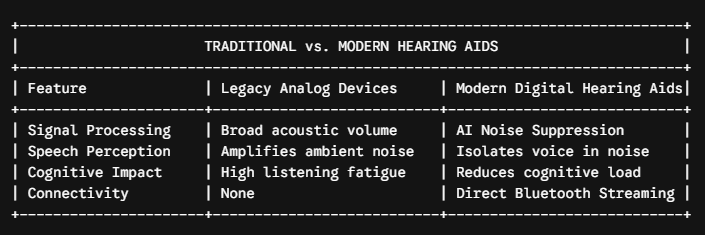
In its benchmark 2020 report on dementia prevention, intervention, and care, the Lancet Commission identified 12 modifiable risk factors spanning an individual’s lifetime—including hypertension, obesity, smoking, depression, and physical inactivity.
Remarkably, the commission concluded that managing mid-life hearing impairment (between ages 45 and 65) is the single largest modifiable risk factor for dementia, accounting for roughly 8% of all global dementia cases. The landmark study established a striking dose-response correlation:
These findings highlight why early audiological intervention during middle age is crucial. Addressing mild hearing deficits before severe neural structural changes occur helps protect cognitive reserves.
Further supporting evidence published in PMC (PMC11285555) explores the deep biological crosstalk between hearing impairment and neurodegenerative disorders such as Alzheimer’s disease. Clinical data indicates that patients suffering from untreated age-related hearing impairment exhibit elevated levels of phosphorylated tau protein in their cerebrospinal fluid—a key biomarker of neurofibrillary tangles found in Alzheimer’s disease.
Moreover, retrospective cohort studies cited in the research reveal that even sudden sensorineural hearing loss (SSHL) increases the subsequent hazard ratio for all-cause dementia by 1.39 times. The clinical literature underscores that sensorineural degradation accelerates underlying neurodegenerative pathology, reinforcing the urgent need for timely mid-life hearing care.
Published in The Lancet in 2023, the landmark ACHIEVE Study (Aging and Cognitive Health Evaluation in Elders), conducted across multiple U.S. medical centers including Johns Hopkins University, evaluated 977 older adults aged 70 to 84 with untreated hearing loss over a 3-year randomized controlled trial.
The results offered definitive clinical evidence: among older adults at increased risk for cognitive decline, treating hearing loss with modern digital hearing aids slowed the rate of cognitive decline by 48% over 3 years.
This extraordinary clinical proof confirms that while untreated hearing loss and dementia risk present a serious public health concern, comprehensive audiological management provides a proven, low-risk way to protect cognitive function and slow down memory loss in aging adults.
The technological landscape of hearing healthcare has evolved dramatically over the past decade. The outdated, bulky, whistling amplifiers of the past have been replaced by sophisticated micro-computers capable of sophisticated signal processing, artificial intelligence, and seamless digital connectivity.
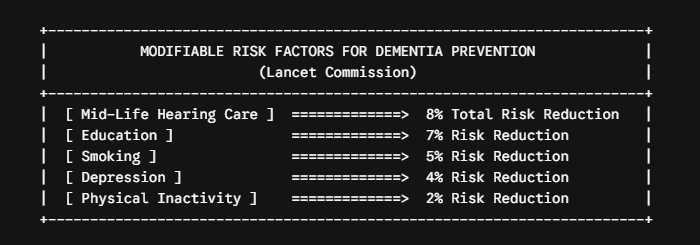
The central objective of ACHIEVE study hearing aids and modern digital hearing technology is not merely to make sounds louder, but to restore clarity to acoustic signals. Advanced digital signal processors continuously sample the surrounding environment thousands of times per second, isolating human voice frequencies while actively suppressing background noise.
By restoring directional speech perception and clearing up garbled speech-in-noise inputs, modern digital hearing devices eliminate the need for the brain to engage in exhausting mental workarounds. By reducing this cognitive load, hearing aids free up valuable neural processing capacity for working memory, active comprehension, and fluid conversation, effectively alleviating daily cognitive fatigue.
When an individual wears properly fitted, prescription digital hearing aids, the auditory cortex is re-stimulated with rich acoustic data. This consistent sensory input reawakens dormant neural pathways that had quieted during prolonged auditory deprivation.
Structural neuroimaging shows that consistent hearing aid use helps stabilize temporal lobe grey matter volume and prevents additional neuro-auditory degeneration. Re-establishing regular sensory input allows the central nervous system to maintain its neuroplasticity, supporting healthy cognitive function over time.
Beyond physical brain mechanics, modern digital hearing aids help restore an individual’s confidence, emotional well-being, and active social life. Today’s discreet devices feature direct Bluetooth connectivity, enabling seamless audio streaming from smartphones, televisions, and tablets directly to the user’s ears.
Equipped with these advanced tools, seniors can once again engage comfortably in dinner conversations, participate in group activities, attend public events, and stay connected with loved ones. By removing communication barriers, digital hearing care directly combats social isolation in seniors, helping older adults stay sharp, emotionally fulfilled, and active members of their communities.
To ensure your investment stands up to the demands of the season, incorporate this structured, step-by-step daily maintenance protocol into your schedule:
EXCELLENTTrustindex verifies that the original source of the review is Google. Best servicePosted onTrustindex verifies that the original source of the review is Google. All type of hearing aids are availablePosted onTrustindex verifies that the original source of the review is Google. A trusted and familiar hearing aids clinicPosted onTrustindex verifies that the original source of the review is Google. Signia best h/aidPosted onTrustindex verifies that the original source of the review is Google. Signia best hearing aidPosted onTrustindex verifies that the original source of the review is Google. Signia best hearing aidPosted onTrustindex verifies that the original source of the review is Google. A range of hearing aids are availablePosted onTrustindex verifies that the original source of the review is Google. Very fast and prompt service......liked itPosted onTrustindex verifies that the original source of the review is Google. Hearing machine in good condition, staff is good and polite.Posted onTrustindex verifies that the original source of the review is Google. Best hearing aidsVerified by TrustindexTrustindex verified badge is the Universal Symbol of Trust. Only the greatest companies can get the verified badge who has a review score above 4.5, based on customer reviews over the past 12 months. Read more
Untreated hearing loss increases dementia risk through three primary mechanisms: cognitive overload (forcing the brain to work harder to decode sound at the expense of memory), structural brain atrophy (shrinkage of the auditory cortex from lack of sensory stimulation), and social isolation, which deprives the brain of vital mental stimulation.
While digital hearing aids cannot reverse pre-existing neurodegenerative damage or cure diagnosed dementia, landmark clinical research such as the ACHIEVE study proves that proper audiological intervention slows down the rate of cognitive decline by up to 48% in older adults at risk, preserving remaining mental sharpness and memory function.
The Lancet Commission identifies mid-life (ages 45 to 65) as the critical window where untreated hearing loss begins to impact long-term dementia risk. Audiologists recommend establishing a baseline clinical hearing test by age 45 to 50, followed by annual or biennial check-ups to catch subtle sensorineural changes early.
When acoustic inputs are unclear, the brain uses extra mental energy attempting to decode garbled speech patterns. This diverted cognitive energy leaves fewer mental resources available for working memory, focus, problem-solving, and critical thinking, leading to severe mental tiredness after routine social interactions.
The Johns Hopkins-led ACHIEVE study was a 3-year randomized controlled trial of 977 older adults. It revealed that treating hearing loss with properly fitted digital hearing aids slowed down the rate of thinking and memory loss by 48% over three years among seniors at increased risk for cognitive decline.
Early signs include difficulty understanding speech in noisy environments (like busy restaurants), feeling that people are mumbling, needing the television or radio volume set higher than others prefer, experiencing ringing in the ears (tinnitus), and feeling mentally drained after long conversations.
When the ear fails to transmit clear sound impulses to the central auditory system, the corresponding auditory regions in the brain’s temporal lobe receive insufficient stimulation. Over time, the brain prunes away these underutilized neural connections, leading to accelerated grey matter shrinkage and loss of brain volume.
Yes, clinical studies published in PMC medical databases show that sudden sensorineural hearing loss (SSHL)—an otological emergency characterized by a rapid drop in hearing—is associated with a 1.39 times higher likelihood of developing all-cause dementia compared to individuals without a history of SSHL.
Unlike legacy analog devices that simply amplified all ambient noise indiscriminately, modern digital hearing aids utilize advanced signal processing and AI to isolate speech frequencies, reduce background chatter, and deliver clear audio inputs directly to the brain, significantly lowering cognitive strain.
CC Saha Ltd. provides comprehensive diagnostic audiological assessments, personalized hearing care strategies, and advanced digital hearing aid technology through its expert platform Audiology Avenue. Their certified audiologists help patients optimize speech perception, reduce cognitive fatigue, and safeguard long-term brain health.
Don’t Let Monsoon Moisture Dampen Your World!
Is your hearing aid crackling, cutting out, or struggling to keep up with Kolkata’s heavy rains? Don’t risk permanent tech damage or painful monsoon ear infections. Protect your investment and your hearing health by booking a professional Monsoon Diagnostic & Deep-Cleaning Session at CC Saha Ltd. today!
Whether you need to stock up on high-grade hearing aid dehumidifiers or want to test-drive the latest IP68 waterproof hearing aids in Kolkata, our expert audiologists are here to help you stay connected, rain or shine.
Experience Universal Accessibility at Your Nearest CC Saha Clinic: Click Here to Book Your Appointment
Speak to an Expert: Call our Toll-Free number 1800 570 9930 (Available Mon-Sat | 10:00 am – 6:30 pm)
Visit CC Saha Ltd.—90 Years of Trust and Excellence.
#UntreatedHearingLossAndDementiaRisk #HearingHealth #CognitiveDecline #DementiaPrevention #AudiologyAvenue #CCSahaLtd #BrainHealth #DigitalHearingAids #ACHIEVEStudy #HealthyAging #CCSahaLtd #AudiologyAvenue #HearingLossSolutions
Early intervention is the key to paediatric hearing care. Learn how CC Saha Ltd. combines audiology, speech therapy, and occupational therapy for success.

As we welcome 2026, it is time to prioritize ear health. Explore our guide on making impactful hearing resolutions for the New Year, from annual testing to upgrading your devices.

At CC Saha Ltd., excellence in hearing care meets a legacy of compassion and expertise. As the best hearing aid centre in Kolkata since 1933, the brand continues to make hearing comfortable, easy, and life-changing for every generation.

CC Saha Ltd delivers the best cochlear implants in Kolkata and Eastern India, specializing in various types and guiding patients through every stage of the cochlear implant journey.
Early detection of hearing loss can define a child’s ability to communicate, learn, and connect with the world. Paediatric hearing tests are designed to identify hearing challenges at the earliest stages, often before a parent even notices a concern. From new-born OAE and ABR screenings to playful conditioned audiometry in toddlers, these specialized tests ensure accurate results in a child-friendly way.
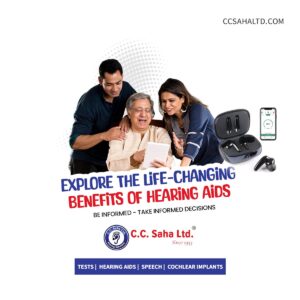
The benefits of hearing aids go far beyond better hearing—they transform lives by improving communication, emotional health, and cognitive vitality. From reconnecting with loved ones to regaining confidence in social and professional settings, hearing aids restore the joy of sound in every moment. With advanced technology that adapts to individual environments, they offer clarity, comfort, and control. Discover how embracing modern hearing solutions through CC Saha Ltd. can help you experience the life-changing benefits of hearing aids today.