Q1. What exactly is the cocktail party effect?
The cocktail party effect is the psychological and neurological ability of the human brain to focus attention on a single auditory stream—such as a specific conversation—while simultaneously filtering out a complex background of competing noises and competing conversations.
Q1 Answer: This remarkable feat relies on the brain’s capacity to process spatial cues, pitch differences, and linguistic context. When you are in a crowded room, your auditory cortex tracks the unique timbre and directional origin of your interlocutor’s voice, suppressing ambient chatter and environmental sounds to maintain clear comprehension.
Q2. Why does hearing loss make it so difficult to understand speech in noisy rooms?
Hearing loss disproportionately impacts the delicate hair cells in the cochlea that detect high-frequency sounds, which carry critical speech consonants like s, t, and k.
Q2 Answer: Because background noise typically consists of loud low-frequency sounds, it easily masks these softer consonant sounds in a process known as frequency masking. When high-frequency hearing is compromised, the signal-to-noise ratio collapses, turning speech into an indistinguishable, smeared acoustic blur.
Q3. How does the brain separate different voices in a crowded environment?
The human brain uses binaural hearing—comparing the tiny differences in arrival time and sound intensity between the left and right ears—to create an internal 3D map of the acoustic environment.
Q3 Answer: By pinpointing where a sound is originating in space, combined with top-down cognitive focus on familiar vocal tones and speech patterns, the brain can selectively amplify the target speaker while dampening off-axis background interference.
Q4. What is listening fatigue, and why does background noise cause it?
Listening fatigue is a state of mental and physical exhaustion experienced after spending extended periods in loud, acoustically demanding environments.
Q4 Answer: When hearing impairment prevents the ears from delivering clean audio signals to the brain, cognitive centers must work overtime to fill in the missing gaps, decode distorted speech, and suppress background noise. This heavy cognitive load drains mental energy, leading to exhaustion.
Q5. Can modern hearing aids help improve speech perception in noise?
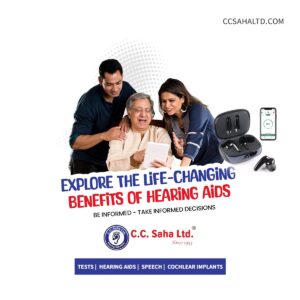
Yes, modern digital hearing aids are specifically engineered to tackle difficult listening environments using advanced digital processing and acoustic mapping.
Q5 Answer: Contemporary hearing devices utilize multi-channel digital noise reduction, dynamic compression, and adaptive directional microphones that automatically focus on speech directly in front of the wearer while actively suppressing ambient room noise from the sides and rear.
Q6. What is a signal-to-noise ratio, and why does it matter for hearing health?
Signal-to-noise ratio (SNR) is the decibel measurement comparing the volume of the desired target sound (speech) against the volume of the background noise.
Q6 Answer: For individuals with normal hearing, a positive SNR is ideal, meaning the speech is louder than the background. Individuals with hearing loss often require a significantly higher SNR—meaning speech must be much louder than the background—to achieve the same level of speech comprehension.
Q7. How can I protect my hearing health during social events and gatherings?
Protecting your auditory wellness in loud social settings involves practical positioning, environmental awareness, and proactive communication.
Q7 Answer: You can improve your listening success by choosing seating away from kitchens, speakers, and high-traffic corridors, facing conversational partners directly to utilize visual speechreading (lip-reading) cues, and taking scheduled acoustic rest breaks in quieter spaces throughout the event.
Q8. What is frequency masking, and how does it affect daily communication?
Frequency masking occurs when a louder, lower-frequency background sound completely obscures or overpowers a softer, higher-frequency sound occurring simultaneously.
Q8 Answer: In daily communication, ambient low-frequency hums and crowd murmur mask the subtle high-frequency consonant sounds necessary for word distinction, causing words to sound slurred, mumbled, or identical to one another.
Q9. Are there auditory training exercises that can sharpen my listening skills?
Yes, auditory rehabilitation and brain-training programs are clinically validated tools designed to improve central auditory processing and speech-in-noise performance.
Q9 Answer: These structured exercises challenge your brain to rapidly differentiate phonetic sounds, track competing auditory streams, and improve cognitive processing speed, helping you extract maximum clarity from degraded or noisy audio signals.
Q10. When should I consult an audiologist regarding background noise difficulties?
You should schedule a professional audiological evaluation as soon as you notice persistent difficulty following conversations in social settings or feel unusually drained after social interactions.
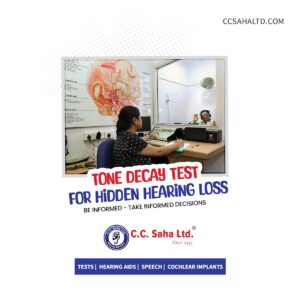
Q10 Answer: Early intervention is vital for preserving auditory health and reducing cognitive strain. A comprehensive assessment by specialists at C.C. Saha Ltd. can uncover hidden hearing loss, establish a baseline for your auditory wellness, and connect you with personalized solutions designed to bring clarity back to your world.