
A Comprehensive Guide to Vertigo and Balance Tests in Kolkata
Living with long-term balance issues can be isolating. This guide breaks down essential vertigo and balance tests to help you regain stability and peace of mind.
Hearing is one of the most vital senses for a child’s communication, cognitive, and emotional development. From recognizing a parent’s voice in infancy to acquiring language and social skills during early schooling, hearing shapes how children connect to the world. When hearing loss goes undetected, it can delay speech, affect learning, and lead to social isolation.
That’s why Paediatric hearing tests play a crucial role in a child’s healthcare journey. These specialized assessments, designed for babies and children, help audiologists identify even slight hearing issues early—when intervention has the greatest potential for success.
At CC Saha Ltd., our Paediatric audiology experts emphasize that early detection, accurate diagnosis, and timely intervention form the cornerstone of healthy auditory development in children.
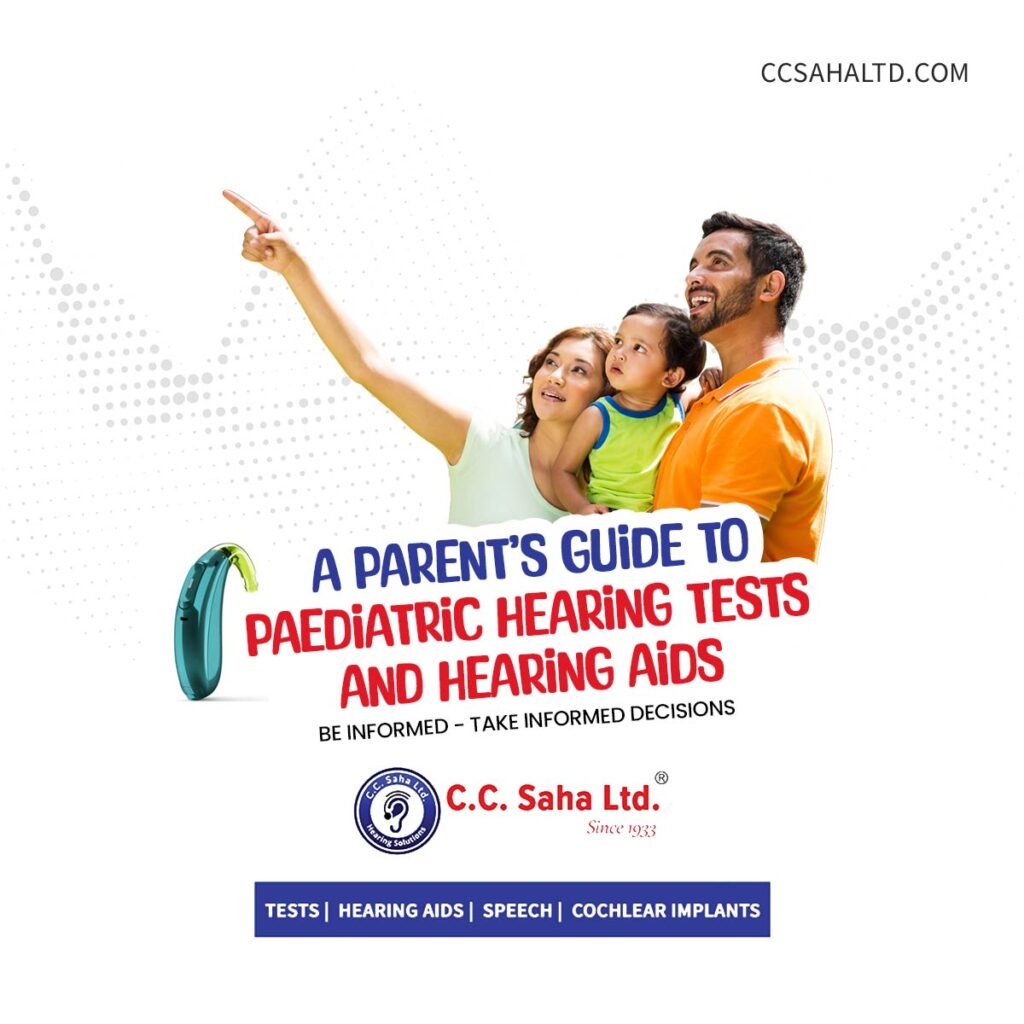
According to global and national hearing-care data, at least 2 to 3 infants per 1,000 live births experience some form of detectable hearing loss. Many others may develop hearing problems later due to infections, genetics, or trauma. Unfortunately, hearing loss in young children often goes unnoticed because they may not express symptoms clearly.
Early hearing screening allows medical teams to:
A child’s brain develops rapidly during the first three years of life, forming neural connections essential for language acquisition. Missing acoustic input during these formative years can lead to irreversible communication challenges later on.
Thus, every new-born and child at risk should undergo comprehensive Paediatric hearing tests as recommended by healthcare professionals.
Hearing loss in children may result from multiple factors, ranging from genetic predispositions to external infections or injuries. Some common causes include:
Recognizing these factors helps parents remain proactive in scheduling child hearing tests and monitoring their child’s listening and speech behaviors.
The methods for Paediatric hearing assessment vary depending on the child’s age, developmental stage, and cooperation level. Audiologists use objective and behavior-based tests to ensure accurate diagnosis.
Conducted within the first few days after birth, this screening uses automated methods like:
Both are painless, quick, and done while the baby sleeps.
Ideal for children aged 6 months to 2 years, this test pairs sounds with engaging visual rewards (like animated toys). When the child turns toward a sound, visual reinforcement encourages consistent responses.
Between 2 and 5 years, children can participate in playful listening tasks—such as dropping a block in a bucket when they hear a tone. It offers accurate threshold results through gamified cooperation.
For school-aged children, the test involves listening to tones and repeating speech words via headphones. It determines hearing thresholds and speech discrimination abilities.
These additional evaluations examine eardrum movement and middle ear function—helpful in diagnosing conductive hearing issues like fluid buildup or eustachian tube dysfunction.
Through a combination of these Paediatric audiological tests, professionals can map out a child’s hearing profile and decide on suitable interventions.
Paediatric audiologists specialize not only in testing techniques but also in interpreting results within the context of a child’s developmental milestones. At CC Saha Ltd., our audiologists employ child-friendly communication, behavior management strategies, and scientifically validated testing tools.
They collaborate closely with ENT specialists, speech therapists, and Paediatricians to deliver comprehensive hearing care solutions—from diagnosis to long-term management. For children diagnosed with hearing impairment, personalized rehabilitation plans are created involving hearing aids, cochlear implantation (if necessary), auditory training, and parental guidance.
Hearing test results generally display hearing thresholds plotted on an audiogram—a graph that maps sound frequency against loudness levels. The audiogram helps determine whether the hearing loss is:
Mild losses may affect speech understanding in noisy environments, while moderate to profound losses require assistive devices. Understanding these distinctions empowers parents to make informed decisions about treatment paths.
When a Paediatric hearing test confirms hearing loss, hearing aids often become the first line of intervention. Modern devices are lightweight, discreet, and technologically advanced, making them suitable even for toddlers.
Audiologists consider various factors before recommending a hearing aid:
Digital technologies now allow real-ear measurements, frequency shaping, and Bluetooth connectivity—ensuring both accuracy and user comfort.
Parental involvement is central to successful treatment outcomes. Beyond clinical interventions, the daily reinforcement of auditory skills and speech clarity at home dramatically strengthens progress. Parents should:
Audiology is evolving rapidly. Several innovations are transforming Paediatric hearing care, including:
At CC Saha Ltd., our audiology department stays at the forefront of such advancements, ensuring each child benefits from state-of-the-art technologies.
Hearing diagnosis can be emotionally overwhelming for parents. Therefore, counseling forms a vital component of Paediatric hearing care. Audiologists educate families about:
For over three decades, CC Saha Ltd. has been synonymous with specialized audiological and hearing aid services in Eastern India. Our Paediatric audiology departments are equipped with calibrated instruments, sound-treated rooms, and internationally trained experts dedicated to child-friendly testing.
We follow a family-centered model, where every hearing evaluation is conducted with compassion, precision, and collaboration. Whether it’s newborn screening, behavioral audiometry, or advanced digital hearing aid fitting, our goal remains the same: to ensure every child hears clearly, learns confidently, and speaks freely.
Paediatric hearing care is more than medical science—it’s about enabling potential and nurturing communication. By combining early screening, accurate audiological diagnosis, modern hearing devices, and continuous parental engagement, children with hearing differences can experience rich, fulfilling lives.
At CC Saha Ltd., we believe that every child deserves the joy of hearing—of discovering sounds, words, and connections that shape a brighter future.
Q1. At what age should my child get a hearing test?
Newborn hearing screening should occur soon after birth. Further assessments may be advised if risk factors or developmental delays are observed.
Q2. How long does a Paediatric hearing test take?
Most tests last between 15 to 45 minutes, depending on the child’s cooperation and the type of evaluation.
Q3. Are hearing aids safe for toddlers?
Yes. Modern Paediatric hearing aids are designed for safety and durability. They include tamper-proof battery doors and child-sized ear molds.
Q4. How often should devices be checked or upgraded?
Audiologists recommend check-ups every 3–6 months, and device upgrades every few years or as the child’s hearing needs change.
Q5. Will my child be able to attend regular school?
With proper amplification, therapy, and supportive learning environments, most children with hearing loss perform excellently in mainstream classrooms.
Ready for Sound Clarity? Secure Your Hearing Test with CC Saha Ltd.
Hidden hearing loss doesn’t announce itself—it creeps in quietly. Don’t wait until your child start saying “What?” too often, or worse, falls back on studies. Book your child’s hearing test for hidden hearing loss at CC Saha Ltd today and give the little ears the care they deserve.
Call toll free [Mon-Sat | 10am-6pm] 1800 570 9933 or visit your nearest CC Saha Ltd. hearing clinic to reclaim clarity in your child’s life!
Living with long-term balance issues can be isolating. This guide breaks down essential vertigo and balance tests to help you regain stability and peace of mind.
A deep dive into the trend – Invisible Hearing Aids for Gen Z, turning medical tools into tech and style.
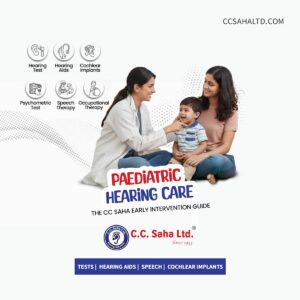
Early intervention is the key to paediatric hearing care. Learn how CC Saha Ltd. combines audiology, speech therapy, and occupational therapy for success.
As we welcome 2026, it is time to prioritize ear health. Explore our guide on making impactful hearing resolutions for the New Year, from annual testing to upgrading your devices.

At CC Saha Ltd., excellence in hearing care meets a legacy of compassion and expertise. As the best hearing aid centre in Kolkata since 1933, the brand continues to make hearing comfortable, easy, and life-changing for every generation.

CC Saha Ltd delivers the best cochlear implants in Kolkata and Eastern India, specializing in various types and guiding patients through every stage of the cochlear implant journey.