
Paediatric Hearing Care
Early intervention is the key to paediatric hearing care. Learn how CC Saha Ltd. combines audiology, speech therapy, and occupational therapy for success.
Across millions of Indian households, a familiar scenario plays out daily: an elderly grandparent sits quietly in the corner during family gatherings, nodding along to conversations they cannot fully hear, or turning the television volume up to deafening levels. When family members notice, the reaction is almost universal: “Achha, unki umar ho gayi hai” (“Well, they are just getting old”).
This casual dismissal reflects a deeply entrenched belief system. The prevalence of hearing loss in elderly in India is frequently brushed aside as an unalterable, harmless consequence of aging. However, clinical audiology and public health research present a starkly different reality. Age related hearing loss in India—known medically as presbycusis—is not merely an inconvenience of growing older; it is a critical, underdiagnosed health crisis that impairs physical safety, emotional well-being, and long-term cognitive stability.
At CC Saha Ltd., through our publication Audiology Avenue, we are committed to dismantling the cultural myths that keep older adults trapped in silence. By understanding the root causes of elderly hearing impairment treatment India, recognizing the psychological toll of untreated presbycusis, and seeking timely professional audiological assessment, Indian families can help their elderly loved ones lead vibrant, connected, and dignified lives.
Hearing impairment is one of the most widespread yet neglected chronic conditions affecting India’s aging population. Public health studies and clinical reports indicate that a vast majority of Indians over the age of 60 experience varying degrees of sensorineural hearing loss. As life expectancy increases across the country, the incidence of hearing loss in elderly in India continues to rise exponentially.
According to research from the Indian Journal of Otolaryngology and Head & Neck Surgery and national health surveys, over 60% to 70% of individuals aged 65 and above exhibit measurable hearing deficits. Despite these staggering numbers, only a tiny fraction seek professional hearing health in older adults care or adopt assistive devices like hearing aids.
Several socio-economic factors contribute to this delay in care:
1. Lack of Routine Screening: Unlike vision tests, blood pressure checks, or diabetic evaluations, baseline audiological assessment is rarely included in annual geriatric health checkups in India.
2. Financial Prioritization: In many Indian households, healthcare expenditures are directed toward life-threatening chronic conditions like hypertension, cardiovascular disease, or diabetes, leaving hearing care viewed as a luxury rather than a health necessity.
3. Geographic and Infrastructural Disparities: Specialized audiology clinics equipped with advanced diagnostic equipment are concentrated primarily in urban centers, making elderly hearing impairment treatment India less accessible for semi-urban and rural seniors.
To understand why hearing loss in elderly in India goes untreated, one must examine the socio-cultural dynamics surrounding aging and disability in the country.
In traditional Indian culture, old age is strongly associated with physical decline and withdrawal from active social roles. Society often treats sensory loss as a natural, expected burden of growing old. This fatalistic attitude encourages seniors to accept auditory decline silently rather than advocate for their health.
While wearing eyeglasses is socially acceptable across all age groups, wearing hearing aids still carries a heavy social stigma. Many older adults worry that wearing a visible hearing device makes them appear fragile, disabled, or burdensome to their children. This vanity-driven avoidance often leads to prolonged delay in seeking age related hearing loss in India interventions.
When seniors disengage from family conversations, drop out of phone calls, or become irritable, relatives frequently misattribute these behaviors to senility, stubbornness, or memory loss. In reality, the individual is simply experiencing the severe exhaustion that comes from straining to hear speech cues in noisy environment—a state known as listening fatigue.
When families label hearing loss in elderly in India as “just old age,” they overlook the cascading health complications that follow unaddressed presbycusis. The human brain relies on consistent auditory signals to process speech, map environmental surroundings, and maintain cognitive reserve.
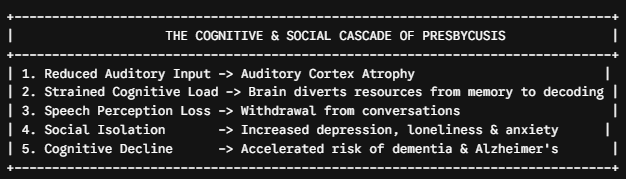
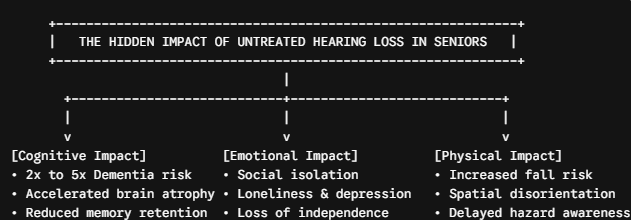
Clinical research published in international and Indian medical journals demonstrates a powerful correlation between hearing health in older adults and cognitive performance. The landmark Johns Hopkins study led by Dr. Frank Lin revealed that seniors with untreated mild hearing loss are twice as likely to develop dementia, while those with severe hearing loss face a fivefold risk.
When auditory pathways are deprived of sound signals, two major physiological changes occur:
Human connection relies heavily on auditory communication. When an elderly person struggles to hear high-frequency sounds—such as grandchildren’s voices or consonant sounds like s, f, t, and sh—conversations become frustrating. Over time, seniors retreat into quiet isolation, avoiding social gatherings, family meals, and community events. This chronic loneliness significantly increases the risk of clinical depression, anxiety, and feelings of worthlessness among Indian elders.
The inner ear houses both the organ of hearing (cochlea) and the organ of balance (vestibular system). Studies show that even mild, untreated age related hearing loss in India triples the risk of accidental falls in older adults. Furthermore, seniors with hearing deficits are less aware of spatial cues, alarm sounds, approaching traffic, or household hazards, posing severe risks to their independent mobility.
The good news is that loss of hearing does not have to compromise quality of life. Modern advancements in digital audiology offer remarkable solutions tailored to the unique auditory needs and lifestyles of Indian seniors.
EXCELLENTTrustindex verifies that the original source of the review is Google. Best servicePosted onTrustindex verifies that the original source of the review is Google. All type of hearing aids are availablePosted onTrustindex verifies that the original source of the review is Google. A trusted and familiar hearing aids clinicPosted onTrustindex verifies that the original source of the review is Google. Signia best h/aidPosted onTrustindex verifies that the original source of the review is Google. Signia best hearing aidPosted onTrustindex verifies that the original source of the review is Google. Signia best hearing aidPosted onTrustindex verifies that the original source of the review is Google. A range of hearing aids are availablePosted onTrustindex verifies that the original source of the review is Google. Very fast and prompt service......liked itPosted onTrustindex verifies that the original source of the review is Google. Hearing machine in good condition, staff is good and polite.Posted onTrustindex verifies that the original source of the review is Google. Best hearing aidsVerified by TrustindexTrustindex verified badge is the Universal Symbol of Trust. Only the greatest companies can get the verified badge who has a review score above 4.5, based on customer reviews over the past 12 months. Read more
Proper care begins with an accurate diagnosis. At CC Saha Ltd., a detailed audiological assessment includes:
Advanced Digital Hearing Technologies
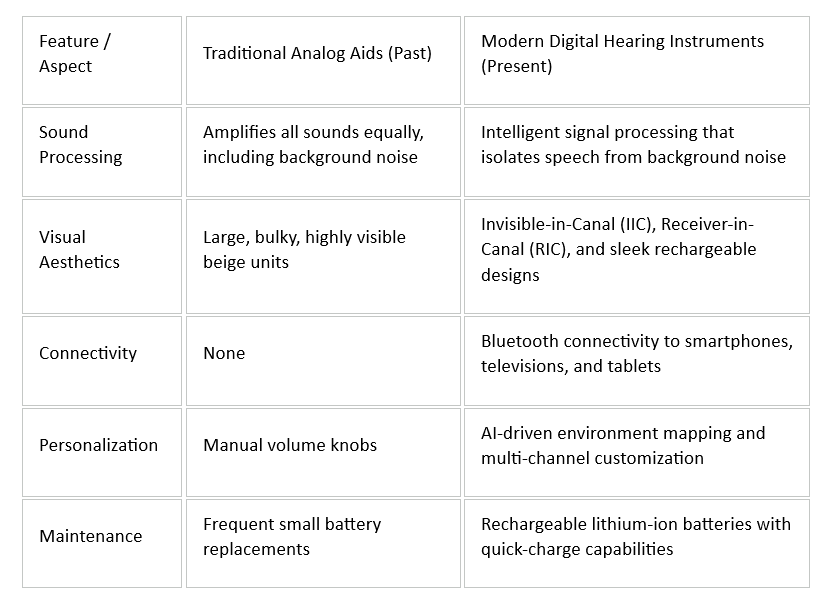
Today’s hearing aids bear little resemblance to the bulky devices of the past. Modern digital devices prescribed for elderly hearing impairment treatment India feature:
Overcoming the cultural stigma around hearing loss in elderly in India requires empathetic, proactive family involvement. Here are practical steps family members can take:
1.Shift the Narrative: Reframe hearing care as a routine tool for active living and longevity, similar to wearing reading glasses or using dental care.
2. Schedule an Evaluation: Offer to accompany your parent or grandparent to an accredited audiology clinic like CC Saha Ltd. for a friendly, comprehensive test.
3. Practice Patient Communication: When speaking to a senior with hearing loss, face them directly in well-lit rooms, speak clearly at a natural pace, and avoid shouting, which distorts speech sounds.
4. Encourage Consistent Usage: Adapting to new hearing instruments takes time. Support your loved one through the initial adjustment phase with daily encouragement and follow-up visits with your audiologist.
Dismissing hearing loss in elderly in India as an unavoidable fate does a profound disservice to our seniors. Age-related hearing loss is a treatable condition, and seeking timely help is an act of empowerment that restores joy, independence, and active participation in family life.
At CC Saha Ltd., our legacy of excellence in audiological care is built on understanding, compassion, and cutting-edge technology. Through our publication Audiology Avenue, we encourage families across India to break the silence surrounding presbycusis. Do not let “it’s just old age” stand between your loved ones and the sounds of life they hold dear.
Q1. Is hearing loss in elderly in India a normal part of aging that should just be accepted?
While age related hearing loss in India (presbycusis) is very common as the auditory nerve natural ages, it should never be passively accepted without intervention. Untreated hearing loss accelerates cognitive decline, increases dementia risks, and leads to severe emotional isolation. Modern elderly hearing impairment treatment India options can restore speech clarity and significantly enhance quality of life.
Q2. What are the earliest signs of hearing loss in elderly in India?
Early warning signs include turning the TV or radio volume unusually high, asking people to repeat themselves frequently, struggling to follow group conversations, misinterpreting words in noisy environments, and gradually pulling away from social interactions due to listening fatigue.
Q3. How does untreated age related hearing loss in India affect mental health?
Untreated hearing loss prevents seniors from engaging naturally with family and friends. This communication barrier causes frustration, embarrassment, chronic anxiety, and deep social isolation. Research shows that seniors with unmanaged hearing loss face a significantly higher risk of depression compared to those with healthy hearing or treated hearing impairment.
Q4. Can hearing aids cure presbycusis completely?
Hearing aids do not cure damaged sensory hair cells in the inner ear, but they successfully compensate for the loss. High-precision digital devices amplify specific missing frequencies, filter background noise, and sharpen speech clarity, allowing the brain to process sound signals effectively again.
Q5. What should we expect during an audiological assessment for a senior?
A professional audiological assessment is a non-invasive, painless process. An audiologist inspects the ear canal with an otoscope, performs Pure Tone Audiometry to map hearing thresholds across various frequencies, and conducts speech recognition testing to determine how well the brain interprets speech.
Q6. Why do many seniors resist wearing hearing aids in India?
Resistance usually stems from the cultural stigma associated with physical weakness, fear of looking old, vanity, past experiences with outdated analog devices, or the misconception that hearing aids are uncomfortable or ineffective. Open family discussions and modern, sleek, nearly invisible devices help overcome these concerns.
Q7. How does hearing loss in elderly in India contribute to fall risks?
The inner ear controls both hearing and balance. Hearing loss reduces spatial awareness, making it difficult for seniors to locate environmental cues and movement. Additionally, when the brain spends excess cognitive energy trying to hear, fewer cognitive resources remain dedicated to maintaining balance and posture.
Q8. Are modern hearing aids suitable for seniors with memory or dexterity problems?
Yes! Today’s hearing care technology includes lithium-ion rechargeable options, eliminating the need to handle small button batteries. Many modern devices feature automatic environment-switching AI, adjusting settings automatically so seniors do not have to manipulate tiny controls.
Q9. Where can families in Kolkata and Eastern India seek reliable elderly hearing impairment treatment India?
Families can trust specialized hearing care providers like CC Saha Ltd., a pioneering name in audiology services in Kolkata. CC Saha Ltd. offers complete diagnostic evaluations, personalized hearing aid fittings, speech therapy, and long-term device maintenance tailored specifically for senior care.
Q10. What role do family members play in managing hearing health in older adults?
Family members play a vital role by identifying early signs of hearing degradation, initiating gentle conversations without judgement, accompanying seniors to clinic appointments, and offering patient support while the senior adapts to hearing instruments.
Take the First Step Toward Better Hearing Today
Don’t let hearing loss quiet the vibrant moments of your family’s life. If you or a loved one are experiencing the early signs of presbycusis, expert support is just a conversation away.
Experience Universal Accessibility at Your Nearest CC Saha Clinic: Click Here to Book Your Appointment
Speak to an Expert: Call our Toll-Free number 1800 570 9930 (Available Mon-Sat | 10:00 am – 6:30 pm)
Visit CC Saha Ltd.—90 Years of Trust and Excellence.
#HearingLossInElderlyInIndia #AgeRelatedHearingLossInIndia #ElderlyHearingImpairmentTreatmentIndia #CCSahaLtd #AudiologyAvenue #HearingHealthIndia #PresbycusisCare #SeniorHealthcareIndia #BreakTheStigma #HearingAidsIndia #CCSahaLtd
Early intervention is the key to paediatric hearing care. Learn how CC Saha Ltd. combines audiology, speech therapy, and occupational therapy for success.

As we welcome 2026, it is time to prioritize ear health. Explore our guide on making impactful hearing resolutions for the New Year, from annual testing to upgrading your devices.

At CC Saha Ltd., excellence in hearing care meets a legacy of compassion and expertise. As the best hearing aid centre in Kolkata since 1933, the brand continues to make hearing comfortable, easy, and life-changing for every generation.

CC Saha Ltd delivers the best cochlear implants in Kolkata and Eastern India, specializing in various types and guiding patients through every stage of the cochlear implant journey.
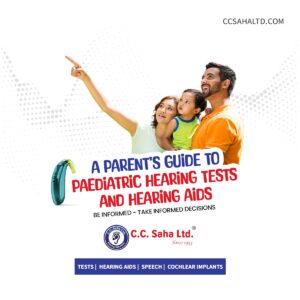
Early detection of hearing loss can define a child’s ability to communicate, learn, and connect with the world. Paediatric hearing tests are designed to identify hearing challenges at the earliest stages, often before a parent even notices a concern. From new-born OAE and ABR screenings to playful conditioned audiometry in toddlers, these specialized tests ensure accurate results in a child-friendly way.
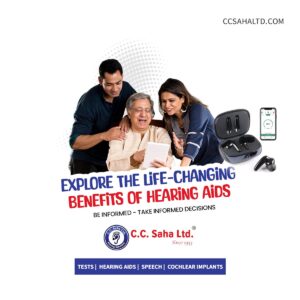
The benefits of hearing aids go far beyond better hearing—they transform lives by improving communication, emotional health, and cognitive vitality. From reconnecting with loved ones to regaining confidence in social and professional settings, hearing aids restore the joy of sound in every moment. With advanced technology that adapts to individual environments, they offer clarity, comfort, and control. Discover how embracing modern hearing solutions through CC Saha Ltd. can help you experience the life-changing benefits of hearing aids today.