Q1. How early can my child have a paediatric hearing test?
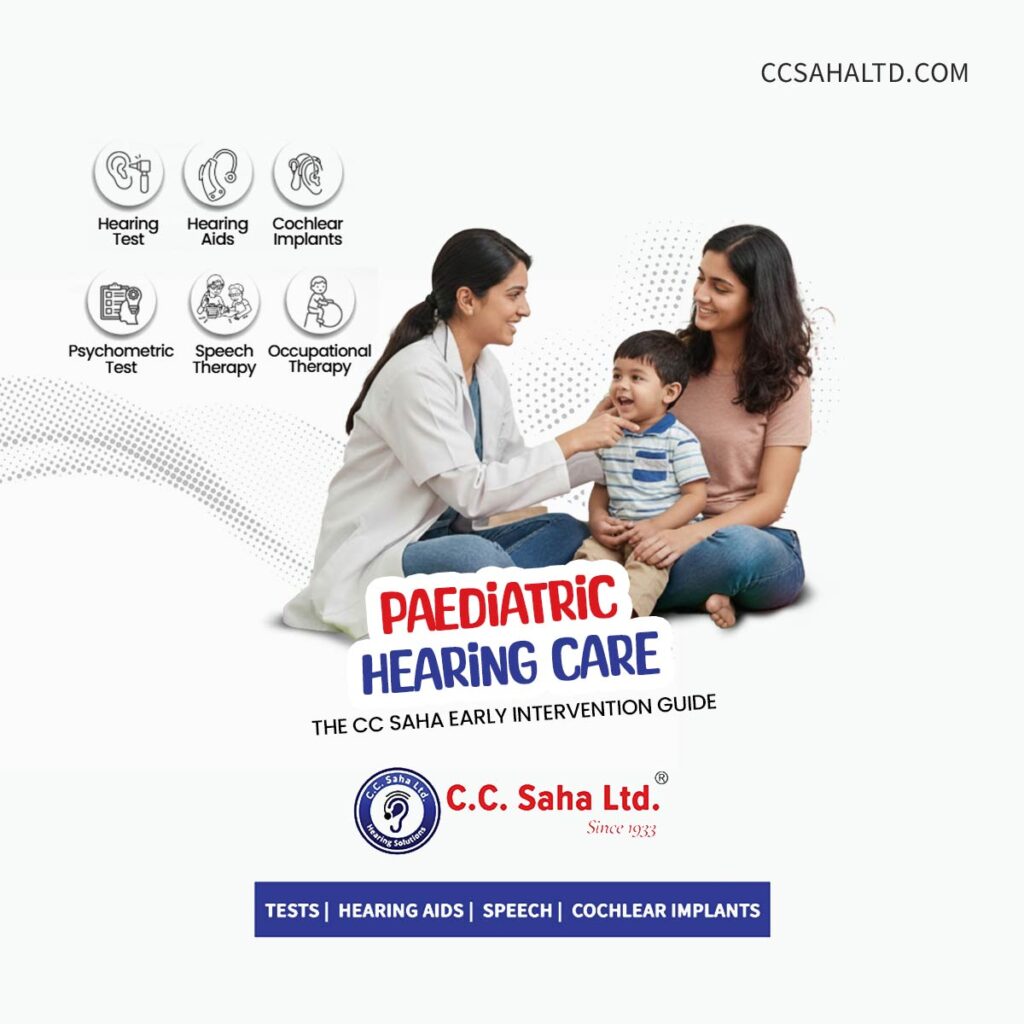
Hearing can be tested as early as a few hours after birth using OAE (Otoacoustic Emissions) screening. At CC Saha Ltd., we recommend testing any newborn who didn’t pass their hospital screening or shows a lack of startle response to loud noises.
Q2. My child is 2 and not speaking yet. Could it be hearing loss?
Yes. Speech delays are often the first sign of hearing issues. We recommend immediate audiology for children to rule out hearing loss before pursuing other developmental evaluations.
Q3. Why do I need a Psychometric Test for a hearing issue?
A psychometric test helps our team understand your child’s learning style and cognitive potential. It ensures that any speech delay is strictly auditory and not related to other developmental nuances.
Q4. Is there a paediatrician available at your clinic?
Yes, having a paediatrician available ensures that the medical health of the ear (like chronic infections or fluid) is managed alongside the audiological intervention.
Q5. What is the difference between a Hearing Aid and a Cochlear Implant?
A hearing aid amplifies sound, while a Cochlear Implant bypasses damaged parts of the ear to stimulate the auditory nerve directly. Our experts help determine the best path based on the results of a paediatric hearing test.
Q6. Can my child lead a “normal” life with hearing loss?
Absolutely. With early intervention most children attend mainstream schools and excel in their chosen careers.
Q7. How long does speech therapy for kids take to show results?
Every child is unique. However, consistency is key. With a holistic plan involving speech therapy for kids and home-based practice, parents usually see progress in vocalization and intent within 3–6 months.
Q8. Why is Occupational Therapy (OT) recommended for my child?
Hearing is part of the sensory system. OT helps children who may be “over-stimulated” by their new hearing devices, helping them regulate their environment and focus on communication.
Q9. Are paediatric hearing aids durable enough for active toddlers?
Yes! Modern paediatric devices are designed with “tamper-proof” battery doors, water resistance, and secure clips to ensure they stay safe during play.
Q10. How can I support my child at home?
The best support is a “sound-rich” environment. Read aloud, narrate your day, and follow the specific auditory-verbal strategies provided by our specialists during your sessions at our hearing clinics.