
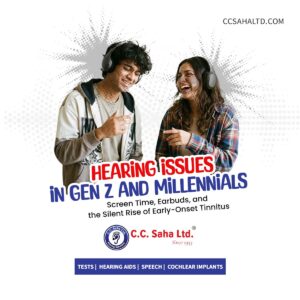
Hearing Issues in Gen Z and Millennials
A comprehensive look at how modern lifestyle habits, heavy earbud usage, and prolonged screen time are driving an alarming increase in early-onset tinnitus among younger generations.
For decades, medical science treated our sensory organs as isolated systems. If you experienced vision loss, you examined your eyes; if you suffered from hearing loss, you investigated acoustic trauma, age-related cellular degeneration, or genetic factors. However, modern multi-omics research is rewriting our understanding of human physiology. Today, researchers are asking a revolutionary question: can gut health affect your hearing?
Emerging clinical data, including landmark studies published in peer-reviewed journals like Frontiers in Nutrition, suggests that the digestive tract and the delicate structures of the inner ear are intimately connected through what scientists term the gut-inner ear axis. By examining how nutritional patterns modulate systemic inflammation, researchers are uncovering how your daily diet can either protect or compromise your auditory acuity.
The human gastrointestinal tract is home to trillions of microorganisms collectively known as the gut microbiota. These microscopic residents do far more than process food; they synthesize essential vitamins, regulate metabolic pathways, and govern up to 70% of the human immune system. When the delicate balance of this ecosystem is disrupted—a state known as dysbiosis—it triggers a cascade of negative physiological events.
To understand how digestive balance reaches the cochlea, we must look at how dietary inflammation and hearing loss intersect. Modern diets rich in ultra-processed foods, refined sugars, and trans fats promote a pro-inflammatory internal environment. When gut barrier integrity is compromised (frequently referred to as “leaky gut”), microbial metabolites and pro-inflammatory cytokines escape into the systemic circulation.
Once circulating inflammatory mediators reach the inner ear, they initiate localized immune responses. The cochlea—specifically the stria vascularis and spiral ganglion—contains resident macrophages. When these immune cells are activated by chronic systemic inflammation, they release reactive oxygen species that damage delicate sensory hair cells. Because these hair cells lack the capacity to regenerate in humans, cumulative inflammatory damage leads directly to progressive sensorineural hearing loss (SNHL).
Recent cross-sectional analyses utilizing data from the National Health and Nutrition Examination Survey (NHANES) have shed light on the quantitative impact of dietary choices on auditory function. Researchers have utilized the Dietary Inflammation Index (DII) to categorize individual nutritional habits based on their pro-inflammatory or anti-inflammatory potential.
Smooth curve fitting models demonstrate that as an individual’s DII score rises above specific clinical thresholds, the statistical risk of developing sensorineural hearing loss increases exponentially. Conversely, diets rich in fiber, antioxidants, and omega-3 fatty acids actively suppress systemic inflammation. Mendelian randomization studies further corroborate these findings, revealing that consistent intake of oily and non-oily fish—foods rich in anti-inflammatory polyunsaturated fatty acids—substantially reduces the long-term risk of auditory decline.
Therefore, when patients inquire whether can gut health influence hearing stability over time, clinical data answers with a resounding affirmation. Nutritional choices dictate inflammatory load, and inflammatory load directly dictates the cellular longevity of your auditory apparatus.
Protecting your hearing through nutritional optimization does not require radical medical interventions. Instead, it involves cultivating a gut-friendly dietary lifestyle designed to suppress systemic inflammation and support microvascular health within the inner ear.
EXCELLENTTrustindex verifies that the original source of the review is Google. Best servicePosted onTrustindex verifies that the original source of the review is Google. All type of hearing aids are availablePosted onTrustindex verifies that the original source of the review is Google. A trusted and familiar hearing aids clinicPosted onTrustindex verifies that the original source of the review is Google. Signia best h/aidPosted onTrustindex verifies that the original source of the review is Google. Signia best hearing aidPosted onTrustindex verifies that the original source of the review is Google. Signia best hearing aidPosted onTrustindex verifies that the original source of the review is Google. A range of hearing aids are availablePosted onTrustindex verifies that the original source of the review is Google. Very fast and prompt service......liked itPosted onTrustindex verifies that the original source of the review is Google. Hearing machine in good condition, staff is good and polite.Posted onTrustindex verifies that the original source of the review is Google. Best hearing aidsVerified by TrustindexTrustindex verified badge is the Universal Symbol of Trust. Only the greatest companies can get the verified badge who has a review score above 4.5, based on customer reviews over the past 12 months. Read more
The emerging science surrounding the gut-inner ear axis marks a paradigm shift in how we approach audiological wellness. By recognizing that can gut health affect your hearing, individuals gain a powerful, proactive tool for preserving their sensory health. Nourishing your microbiome with anti-inflammatory whole foods, supporting digestive integrity, and minimizing systemic stress factors do more than improve metabolic vitality—they safeguard the precious sounds of everyday life. For personalized hearing evaluations and expert guidance, trust the clinical specialists at C.C. Saha Ltd. and explore further insights across our publication at Audiology Avenue.
Q1. Can gut health affect your hearing directly?
Yes, clinical research confirms that the digestive system and the auditory system are linked via the gut-inner ear axis. Chronic gut inflammation can release pro-inflammatory cytokines into the bloodstream, which travel to the cochlea and damage sensitive auditory hair cells over time.
Q2. What is the biological mechanism connecting the microbiome to auditory function?
The mechanism involves systemic inflammation and immune activation. When gut dysbiosis compromises the intestinal barrier, inflammatory molecules enter circulation, activating resident macrophages in the inner ear and generating oxidative stress that impairs sound processing.
Q3. How does dietary inflammation index (DII) correlate with hearing loss?
Higher DII scores indicate a diet heavy in pro-inflammatory foods. Epidemiological studies demonstrate that individuals with elevated DII scores exhibit a statistically significant increase in the prevalence of sensorineural hearing loss compared to those following anti-inflammatory diets.
Q4. Can gut health influence hearing recovery after noise exposure?
Emerging studies suggest that a robust, anti-inflammatory microbiome enhances overall systemic cellular repair mechanisms. While damaged hair cells cannot regrow, an optimized internal environment helps mitigate secondary inflammatory trauma following acoustic overstimulation.
Q5. Are there specific foods that protect against age-related hearing decline?
Foods rich in antioxidants, vitamins A, C, and E, magnesium, and omega-3 fatty acids—such as leafy greens, berries, nuts, seeds, and cold-water fish—help neutralize free radicals and protect the delicate vascular supply of the inner ear.
Q6. What role do probiotics play in maintaining auditory wellness?
Probiotics help maintain a healthy intestinal barrier, reduce systemic inflammatory markers, and support optimal immune function, indirectly shielding sensory organs from chronic, low-grade inflammatory damage.
Q7. Is sensorineural hearing loss reversible through diet changes?
Sensorineural hearing loss resulting from permanent hair cell destruction is generally irreversible. However, adopting an anti-inflammatory nutritional protocol can slow the progression of age-related or noise-induced auditory decline and preserve remaining hearing function.
Q8. How does the gut-inner ear axis affect balance and vestibular health?
The inner ear houses both the cochlea (hearing) and the vestibular system (balance). Chronic inflammation driven by gut dysbiosis can impact inner ear fluid homeostasis, potentially contributing to vestibular dysfunction, dizziness, and balance disturbances alongside hearing loss.
Q9. What are the worst dietary habits for hearing health?
Diets high in ultra-processed foods, trans fats, refined sugars, and sodium promote systemic inflammation, impair microvascular circulation, and alter gut microbiota composition in ways that heighten neurological and sensory vulnerability.
Q10. How can I assess my personal dietary inflammation level?
Consulting a clinical nutritionist or audiologist allows you to evaluate your dietary habits against validated tools like the Dietary Inflammation Index, helping you craft a targeted nutritional plan tailored to safeguard your long-term sensory health.
Is Your Diet Affecting Your Hearing?
Discover personalized solutions for your unique auditory profile.
Experience Universal Accessibility at Your Nearest CC Saha Clinic: Click Here to Book Your Appointment
Speak to an Expert: Call our Toll-Free number 1800 570 9930 (Available Mon-Sat | 10:00 am – 6:30 pm)
Visit CC Saha Ltd.—90 Years of Trust and Excellence.
#GutHealth #HearingLoss #AuditoryHealth #NutritionAndHearing #Microbiome #GutInnerEarAxis #WellnessScience #AudiologyAvenue #AntiInflammatoryDiet #HearingCare #CCSahaLtd #HearingLossAwareness #HearingAids #AudiologyCare
A comprehensive look at how modern lifestyle habits, heavy earbud usage, and prolonged screen time are driving an alarming increase in early-onset tinnitus among younger generations.

Uncover the science of the cocktail party effect and hearing loss. Learn why background noise acts as the ultimate test for your auditory system and how to improve speech perception in crowds.
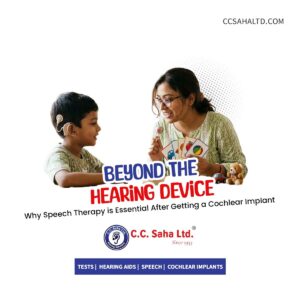
A cochlear implant provides access to sound, but the brain must learn how to interpret it. Discover why mapping and hardware are only 50% of the journey and how post-cochlear implant auditory habilitation builds lifelong communication skills.
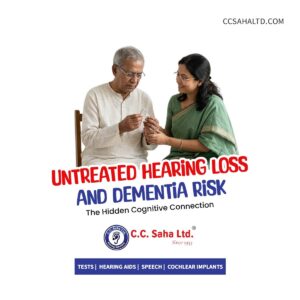
Untreated hearing loss and dementia risk are closely connected through cognitive fatigue, brain atrophy, and social isolation. Discover the scientific breakthroughs showing how timely audiological care and modern digital hearing aids protect long-term mental sharpness and preserve memory.
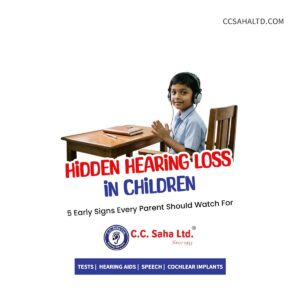
Hidden hearing loss in children often goes undetected by standard school screenings. Learn how to identify early warning signs, differentiate auditory processing issues from speech delays, and seek timely objective assessments.
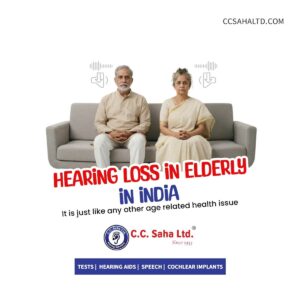
Millions dismiss hearing loss in elderly in India as a normal part of aging, but unaddressed hearing impairment has severe emotional, cognitive, and social consequences. CC Saha Ltd. explores how breaking cultural stigma and adopting early audiological interventions can transform senior healthcare across India.