Q1. Why is speech therapy after cochlear implant surgery necessary if the hardware is working correctly?
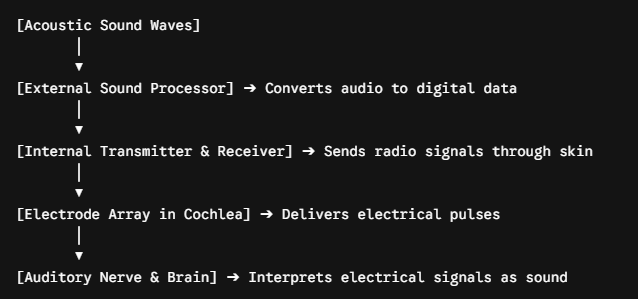
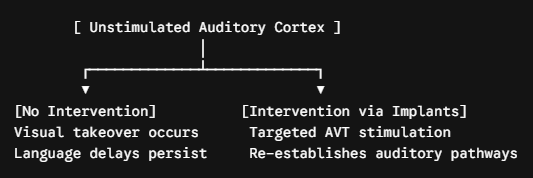
While a cochlear implant provides access to sound, it sends electrical signals rather than biological acoustic impulses to the auditory nerve. The brain does not automatically know how to interpret these signals into recognizable speech. Speech therapy after cochlear implant surgery trains the brain’s auditory cortex to decode these electrical patterns, convert them into meaningful language, and build clear speech production skills.
Q2. What is the difference between standard speech therapy and Auditory Verbal Therapy (AVT)?
Standard speech therapy often addresses overall communication, articulation, and motor speech skills, sometimes incorporating visual aids, lip-reading, or gestures. Auditory Verbal Therapy (AVT) is a specialized approach designed specifically for children with hearing loss who use hearing technology like cochlear implants. AVT focuses exclusively on developing listening skills through the auditory channel alone—without relying on lip-reading or sign language—so the child learns to process sound naturally.
Q3. How soon should speech therapy begin following cochlear implant activation?
Rehabilitation should begin immediately after device activation—typically 2 to 4 weeks after the surgical procedure. Starting speech therapy after cochlear implant activation right away takes advantage of peak brain neuroplasticity, ensuring the user begins building auditory pathways as soon as sound input is restored.
Q4. How long does a recipient need to continue speech therapy after receiving a cochlear implant?
The duration of therapy varies based on the recipient’s age at implantation, duration of hearing loss prior to surgery, consistency of device use, and home practice habits. Children implanted early typically receive structured therapy for 2 to 4 years to reach age-appropriate listening and language benchmarks. Adults usually undergo a few months to a year of targeted auditory rehabilitation to adapt to their new sound input.
Q5. Can adults benefit from speech therapy after cochlear implant activation, or is it only for children?
Adults benefit significantly from post-implant speech therapy and auditory training. While children focus on language acquisition, adults use auditory rehabilitation to retrain their brain to recognize speech patterns through the electrical signal. This helps accelerate word recognition, improves conversation skills in noisy settings, and reduces the learning curve associated with new implant hardware.
Q6. What happens if a child does not receive speech therapy after getting a cochlear implant?
Without structured therapy, a child may struggle to make sense of the sound signals delivered by their implant processor. They might detect environmental sounds but struggle to understand spoken language, express themselves clearly, or develop normal speech patterns. This can lead to persistent speech delays, difficulties in school, and challenges with social interaction.
Q7. What are “Ling Six Sounds” and why are they used in home speech therapy exercises?
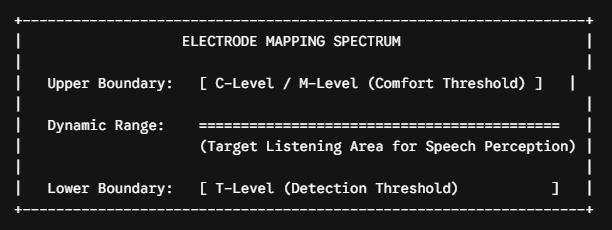
The Ling Six Sound Test consists of six specific speech sounds—/a/, /u/, /i/, /s/, /sh/, /m/—that span the low, middle, and high frequency ranges of human speech. Therapists and parents use this quick check to verify that the cochlear implant user can detect sounds across the full speech spectrum. Performing this test daily ensures the device processor is working properly and mapped correctly.
Q8. How can parents track whether their child is making progress in auditory development?
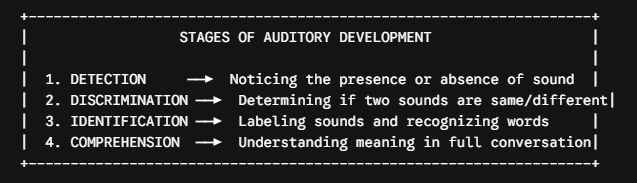
Progress is measured through standardized speech perception tests, developmental auditory milestone checklists, and ongoing clinical evaluations with a speech-language pathologist. Parents can track day-to-day progress by observing whether their child responds to their name without visual cues, turns toward soft environmental sounds, imitates vocalizations, and begins following simple spoken directions at home.
Q9. How many hours a day should a recipient wear their cochlear implant processor?
For optimal brain development and auditory learning, the processor should be worn during all waking hours—typically 12 to 14 hours per day. Consistent wear provides the auditory cortex with a continuous stream of sound, which is essential for building strong neural pathways and making steady progress in therapy.
Q10. Why is parent involvement so critical in Auditory Verbal Therapy?
Parent involvement is essential because children spend far more time at home than in weekly clinical appointments. AVT coaches parents to integrate auditory learning into daily activities like meals, play, and bedtime routines. Consistent, real-world listening opportunities throughout the day help children practice and reinforce the skills learned in therapy.