Q1. What is listening fatigue?
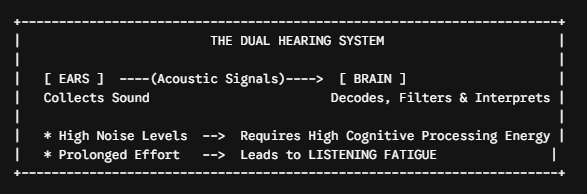
Listening fatigue is a state of mental, cognitive, and physical exhaustion caused by prolonged exertion when processing sound in challenging or noisy environments. It occurs when the brain works overtime to filter background noise and interpret speech signals.
Q2. How does a loud environment drain your mental energy?
Loud environments decrease the signal-to-noise ratio, forcing the brain’s prefrontal cortex to exert extra cognitive effort. The brain must actively filter out ambient noise, reconstruct missing speech sounds, and maintain intense focus, which rapidly consumes cognitive reserves and leaves you feeling exhausted.
Q3. What are the main listening fatigue symptoms?
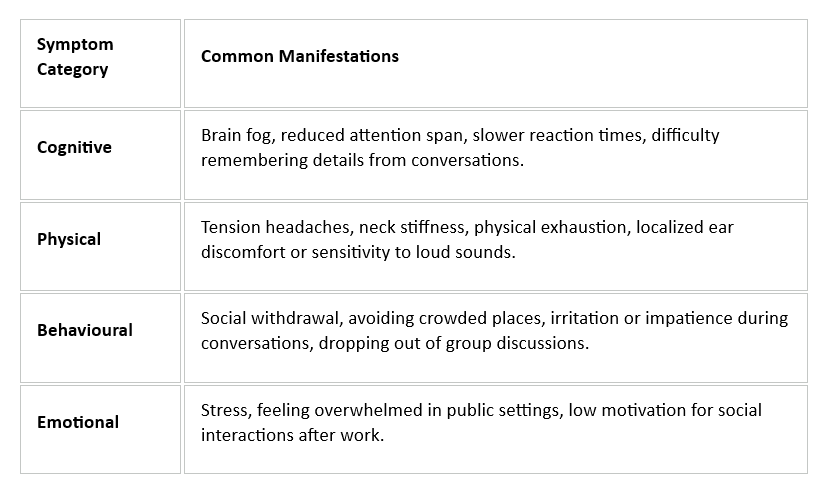
Key symptoms include cognitive brain fog, difficulty concentrating, headache, neck tension, irritability in social settings, social withdrawal, and a deep sense of physical weariness after spending time in noisy places.
Q4. Can people with normal hearing experience listening fatigue?
Yes. Even individuals with perfectly normal hearing thresholds can experience auditory fatigue in highly chaotic, reverberant, or loud acoustic environments. However, the condition is usually more pronounced in individuals with untreated hearing loss or processing difficulties.
Q5. What is the difference between physical exhaustion and ear brain fatigue?
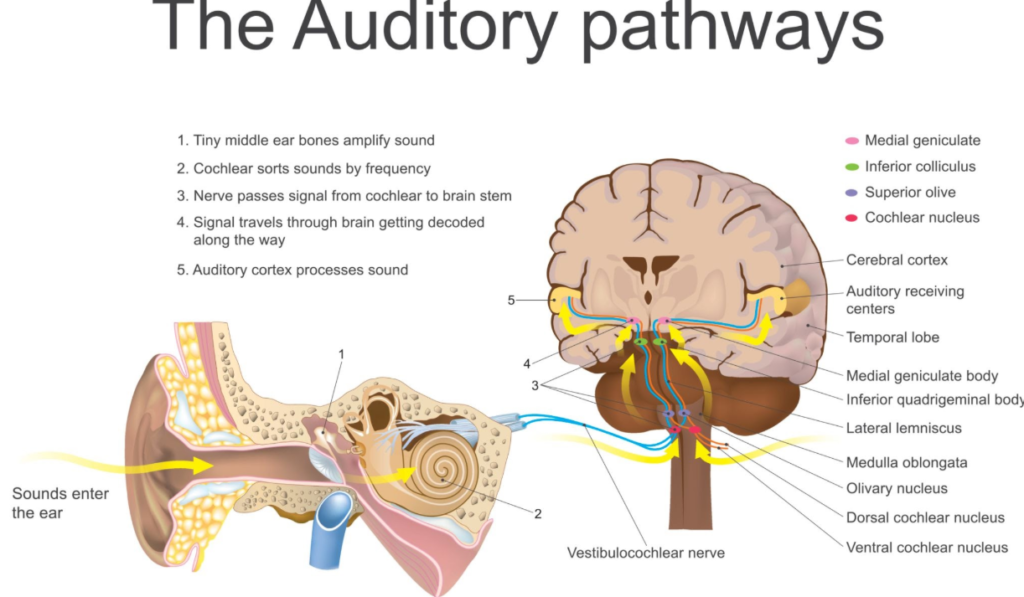
Physical exhaustion results from bodily exertion, whereas ear brain fatigue stems from excessive cognitive load within the auditory cortex and executive processing regions of the brain. While your body remains still, your brain operates at full capacity to decode auditory information.
Q6. How is listening fatigue hearing loss connected?
When hearing loss degrades sound signals arriving from the inner ear, the brain must fill in missing acoustic information through guesswork and context. This continuous mental compensation leads directly to heightened listening fatigue.
Q7. How can modern hearing aids help reduce sound exhaustion?
Modern hearing aids incorporate artificial intelligence, automatic noise suppression, and directional microphones. By filtering out background noise and enhancing target speech frequencies, hearing aids lower the required cognitive effort, significantly mitigating daily exhaustion.
Q8. What is auditory cognitive load?
Auditory cognitive load refers to the amount of mental energy and working memory required by the brain to process, interpret, and pay attention to auditory signals in any given environment.
Q9. How to prevent listening fatigue during long workdays?
To minimize acoustic fatigue during work hours, schedule short periods of quiet, step away from noisy open offices, utilize noise-canceling headphones thoughtfully, limit total headphone duration using the 60/60 rule, and optimize indoor room acoustics where possible.
Q10. When should I see a hearing care professional at CC Saha Ltd.?
You should consult a hearing specialist if you consistently feel drained after social gatherings, struggle to comprehend speech in noisy settings, frequently ask people to repeat themselves, or experience ringing in the ears (tinnitus) following loud exposures.